
NEMA 4X vs NEMA 12
NEMA 12 is the indoor rating for dust, falling dirt, and dripping non-corrosive liquids; however, it does not provide any kind of hazard value for being sprayed or hosed down with water. NEMA 4X provides an indoor/outdoor environment, waterproof against water sprayed with a hose, and also protects against trash and corrosion; NEMA 4X can be made from stainless steel, polycarbonate, fiberglass, or other types of plastics. For example, if you have an industrial machine control panel located in an area where there are no environmental hazards, such as a dry machine room in a factory, you would use a NEMA 12 box. On the other hand, if you have a machine control panel that is located in either a wash-down area, an outdoor storage yard, or a coastal site, you would use a NEMA 4X. The price difference between a NEMA 12 and a NEMA 4X is two to four times difference for the same size enclosure, with the gasket being the primary cost difference, as well as the type of material used.
Quick answer: both NEMA 12 and NEMA 4X ratings are neither a standard of quality. They are based on the tests performed under NEMA 250 and are based on a set of test requirements defined in documents prepared by UL 50E, and both indicate the types of tests the product was designed to pass but do not indicate the quality of workmanship. In some cases, a well-designed NEMA 12 panel will outperform a poorly designed NEMA 4X panel.
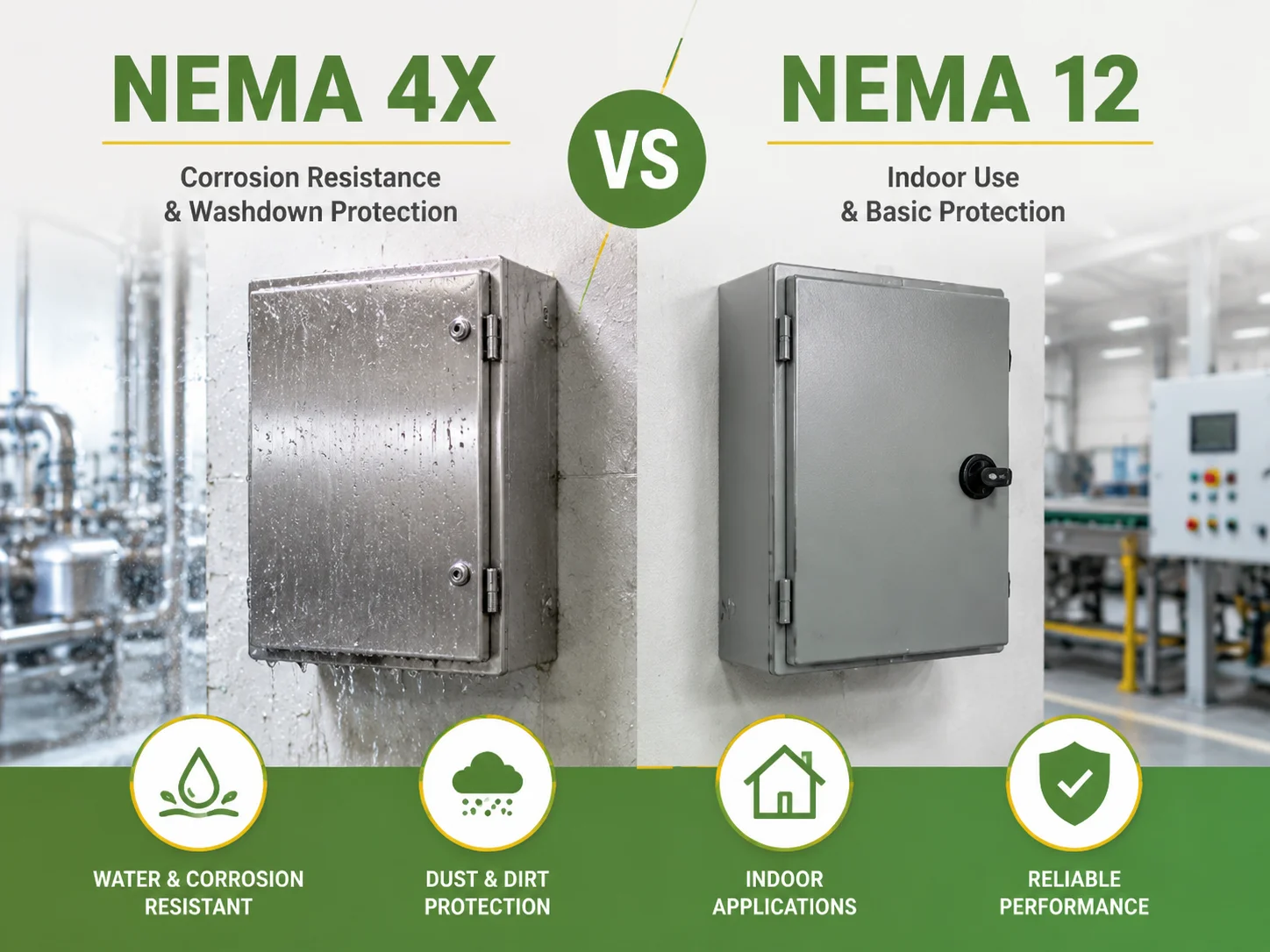
Indoor Dust Versus Outdoor Water
In summary, NEMA 12 ratings provide protection for indoor dust hazards, while NEMA 4X provides protection for water hazards.
An enclosure may be rated as a NEMA 12 enclosure, as defined by NEMA, or designed as a NEMA 4/4X enclosure as defined by the U.L. in ANSI/UL 50. In this case, we are using NEMA 12 definition for our enclosure, because that is what it is. For more detailed explanation of this, please see the following sections entitled “What NEMA 12 Certifies”, “What is NEMA 4/4X”, and “What are the differences”.
The most obvious difference between NEMA 12 and NEMA 4/4X is that NEMA 12 is suitable for indoor environments, while NEMA 4/4X is designed for both indoor and outdoor applications. The comparison between NEMA 12 and NEMA 4/4X may lead to the conclusion that anything rated NEMA 4/4X would not be able to meet specifications outlined by a NEMA 12 rating. This is not necessarily true in every instance. Anything rated NEMA 12 must meet the same standards of protection as anything rated NEMA 4/4X.
What NEMA 12 Certifies
Example of what is meant by the above: “NEMA 12 protects against dust, falling dirt, and dripping non-corrosive liquids.” The same would hold true if we used the statement, “The NEMA 4/4X enclosure protects individuals from being injured or harmed by surrounding items.”A gasket that requires constant compression is not necessary due to the absence of a water jet requiring sealing; a stainless steel exterior is not needed due to the benign atmosphere encountered indoors.
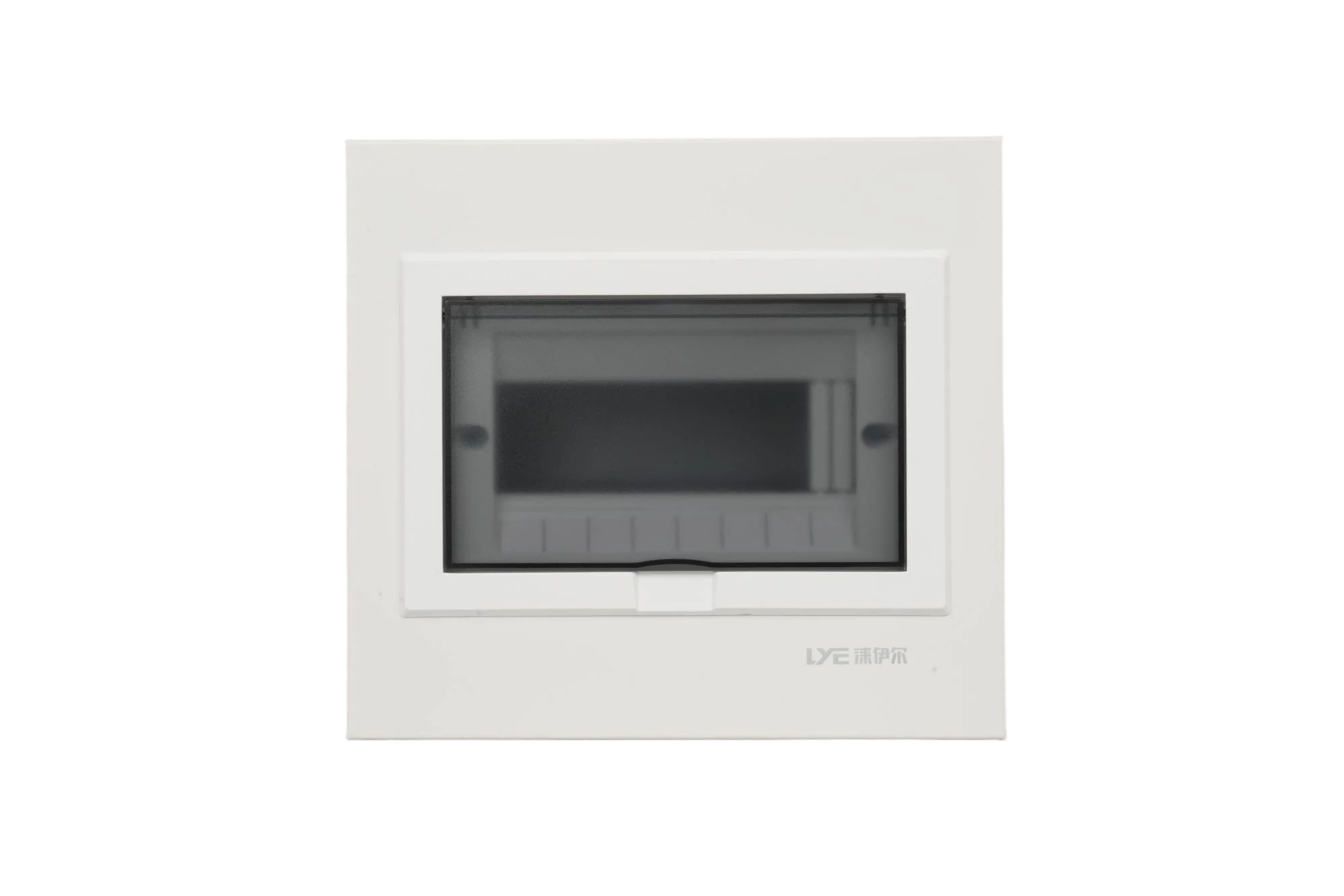
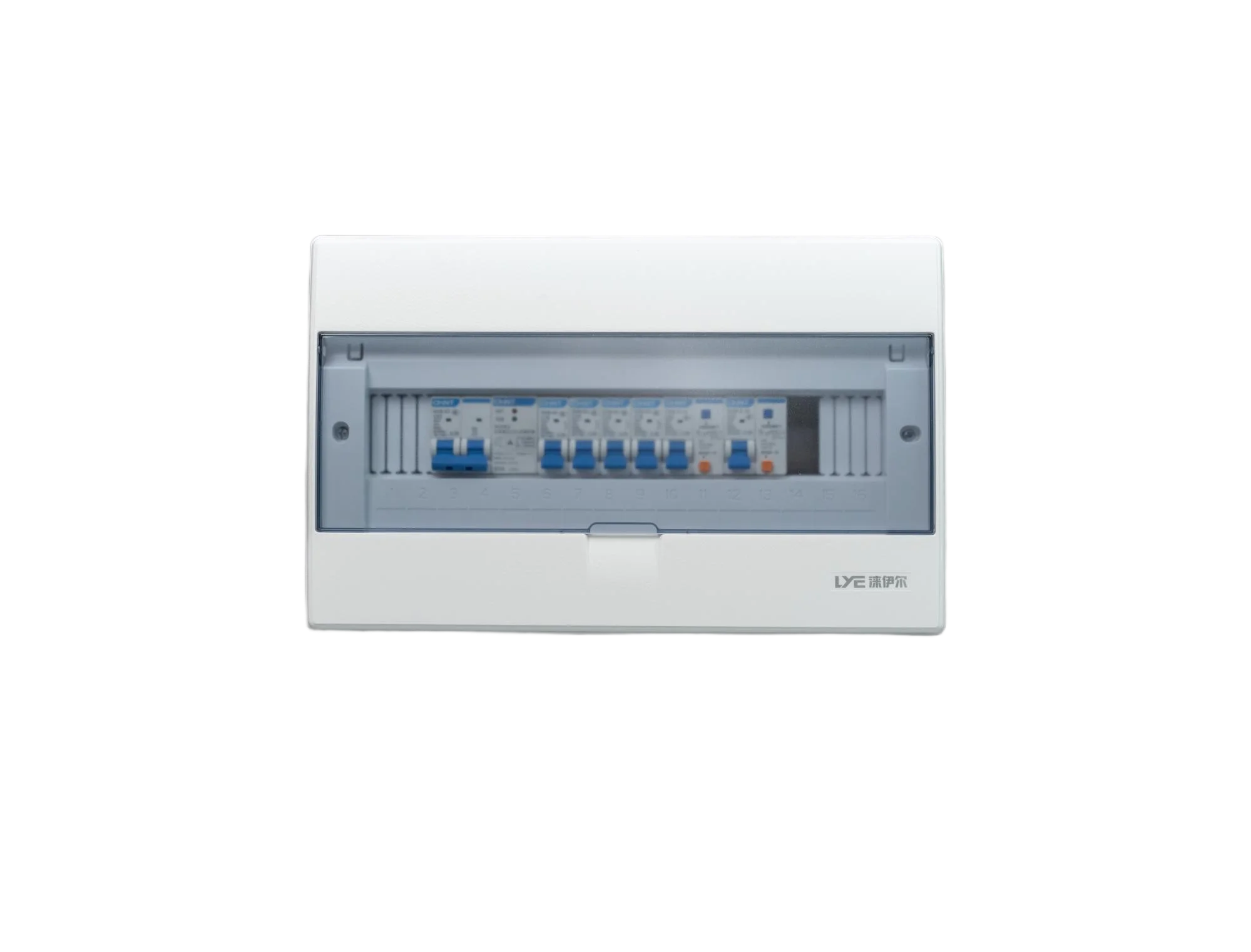
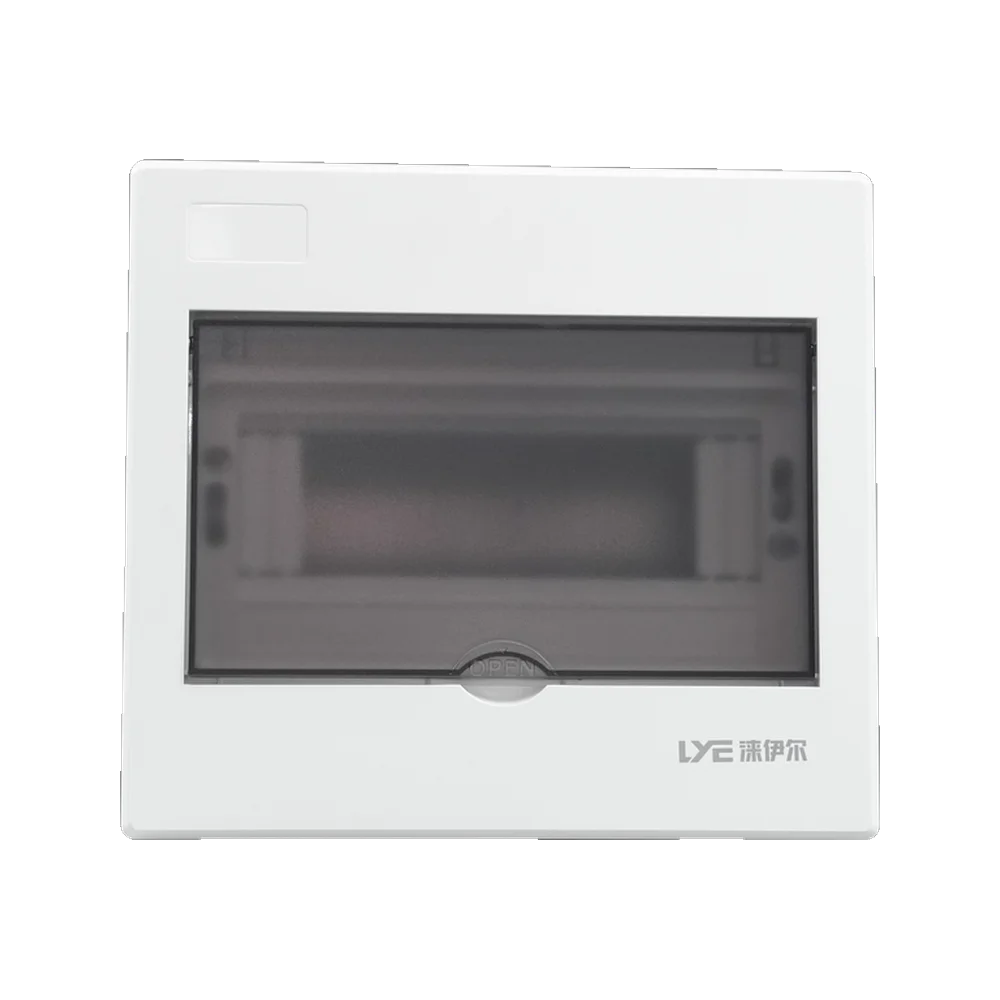
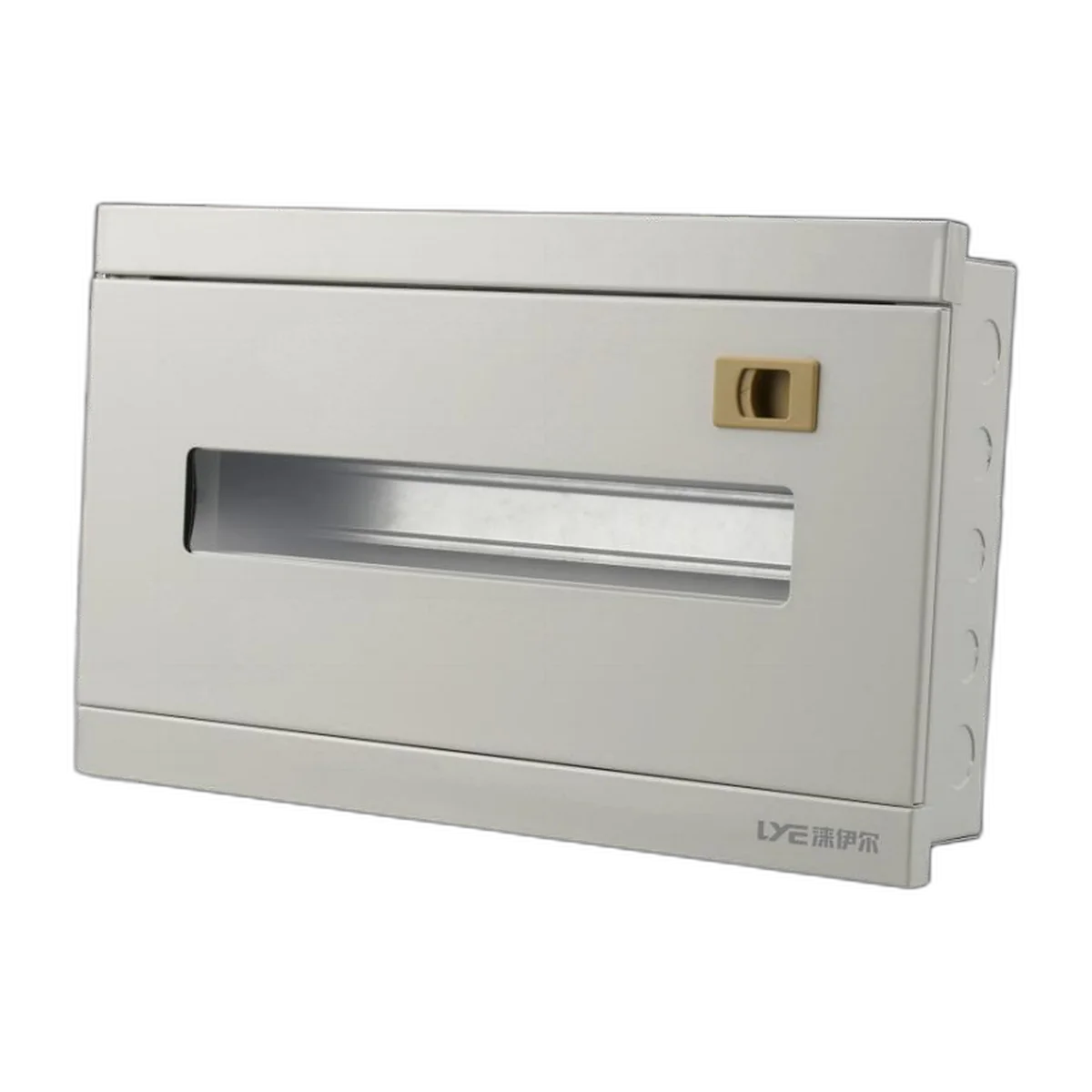
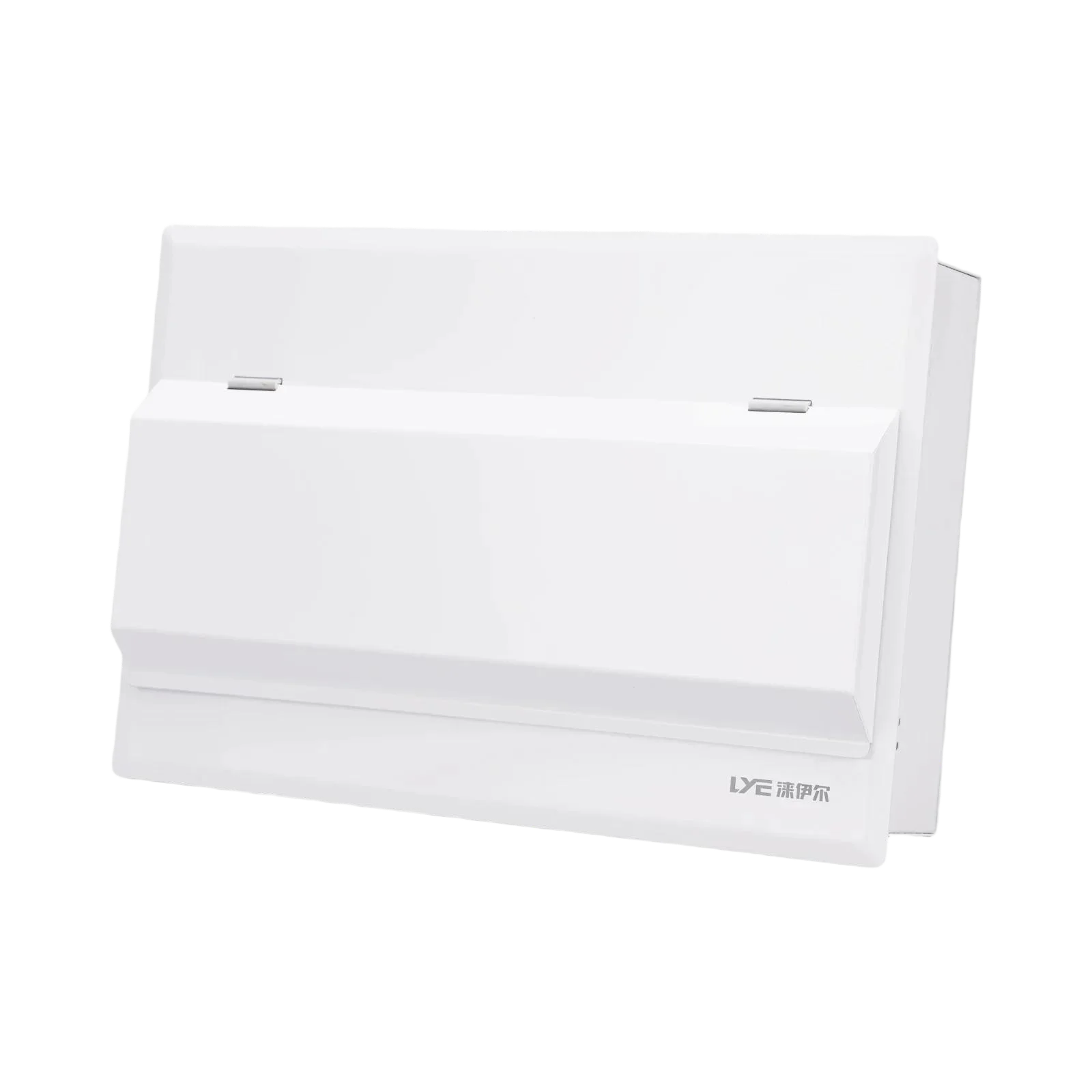
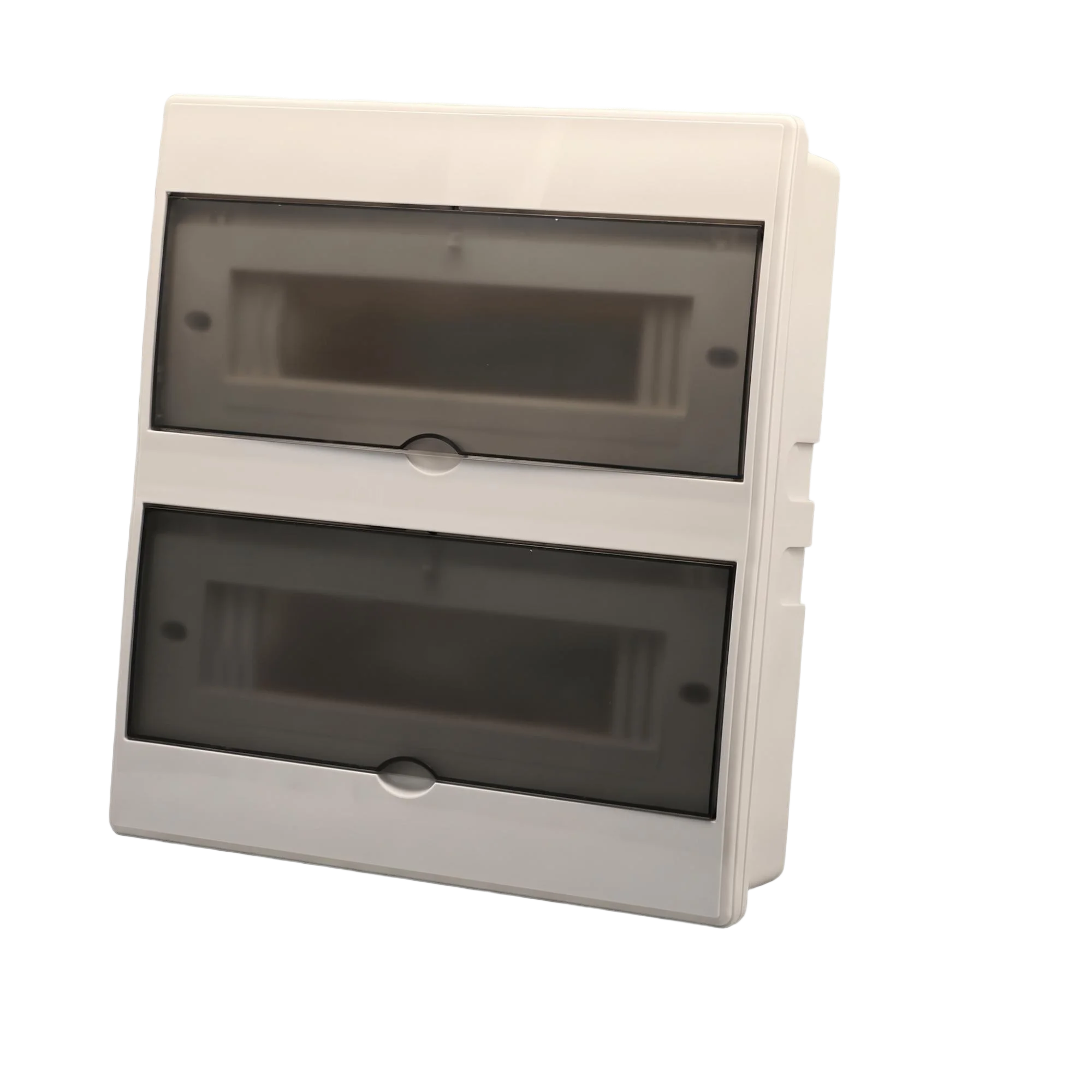
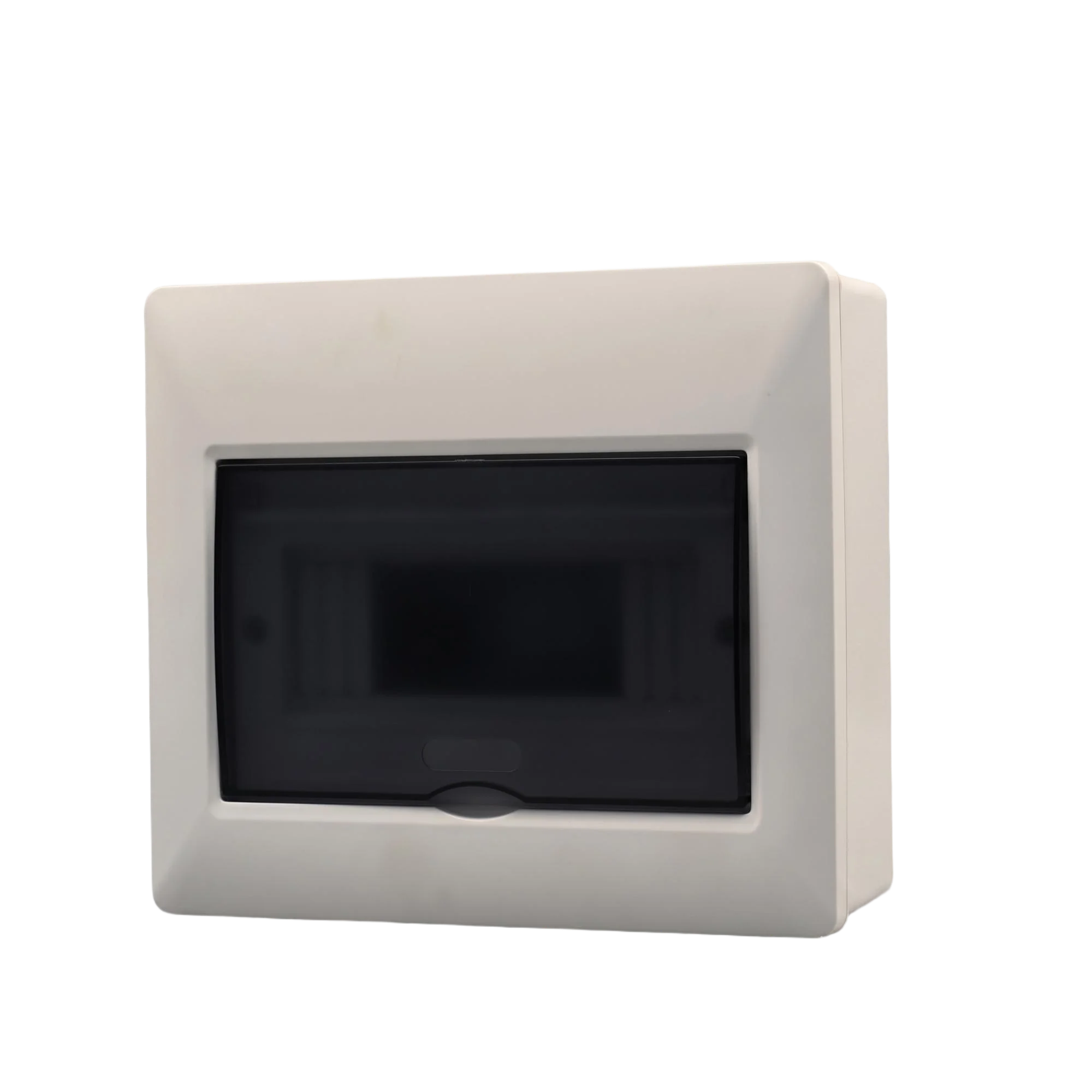
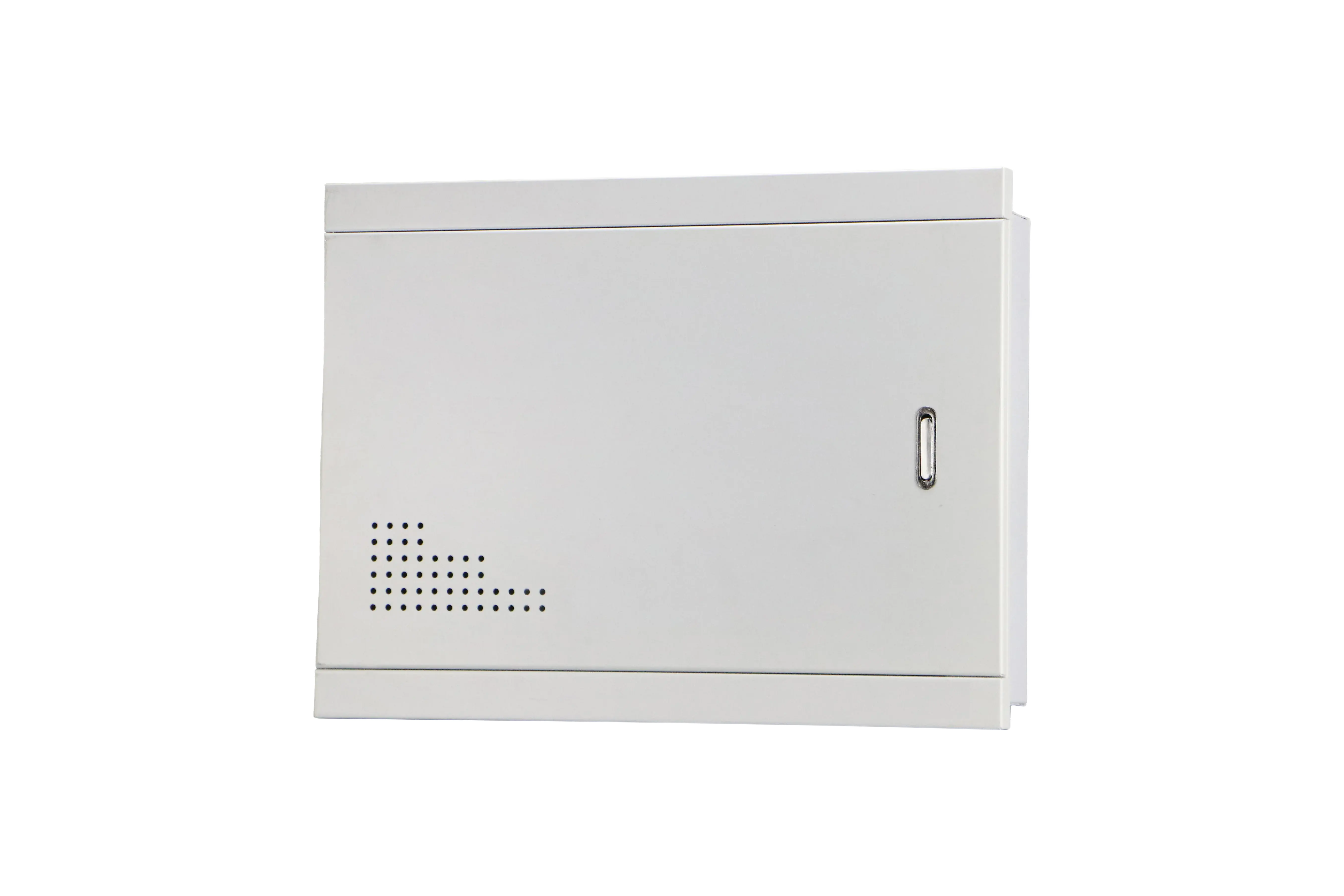
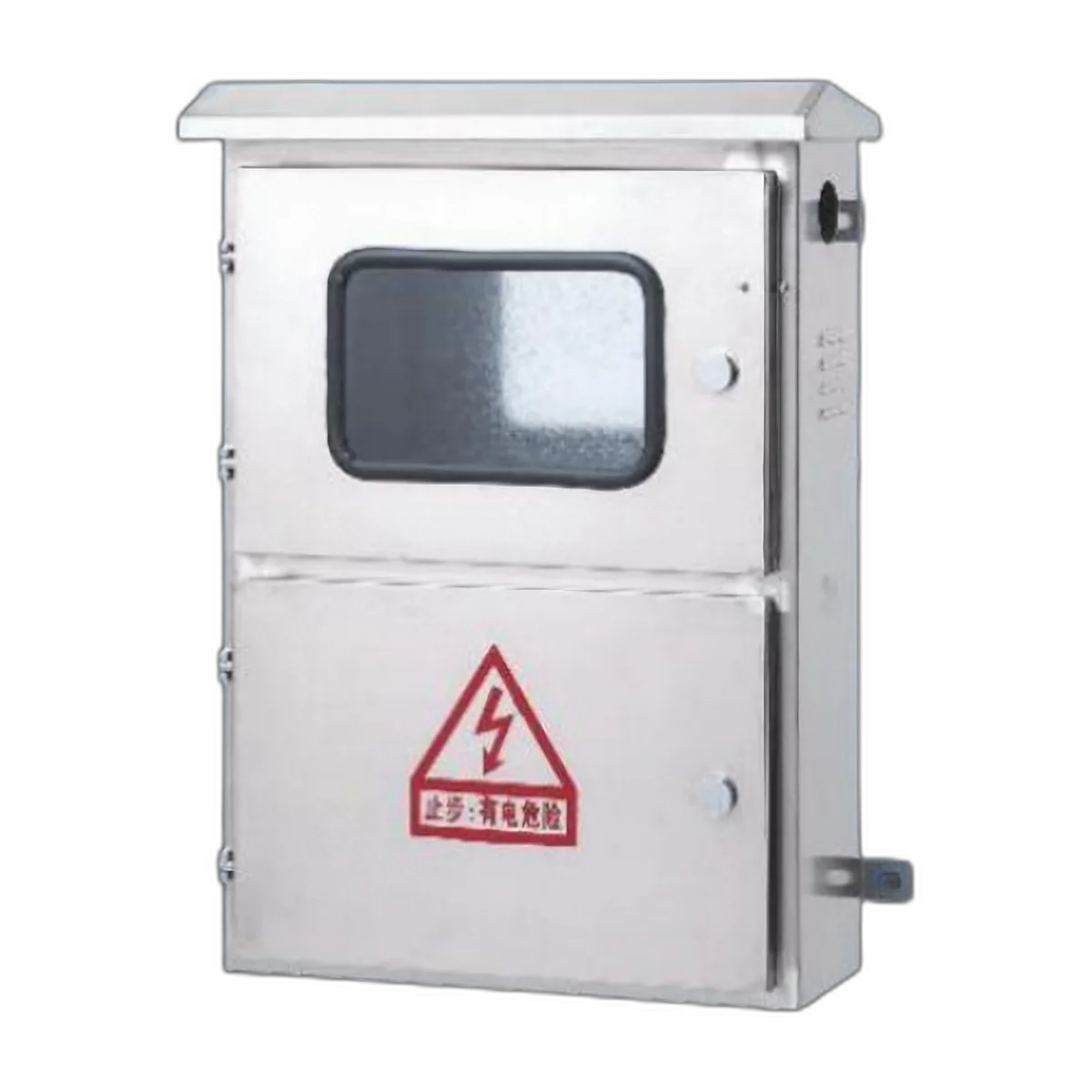
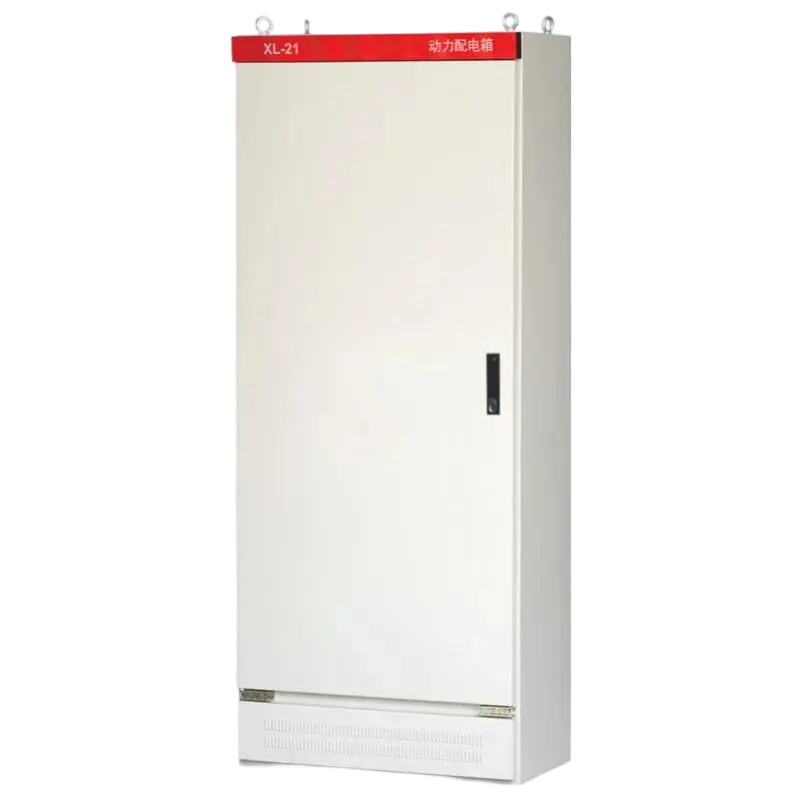
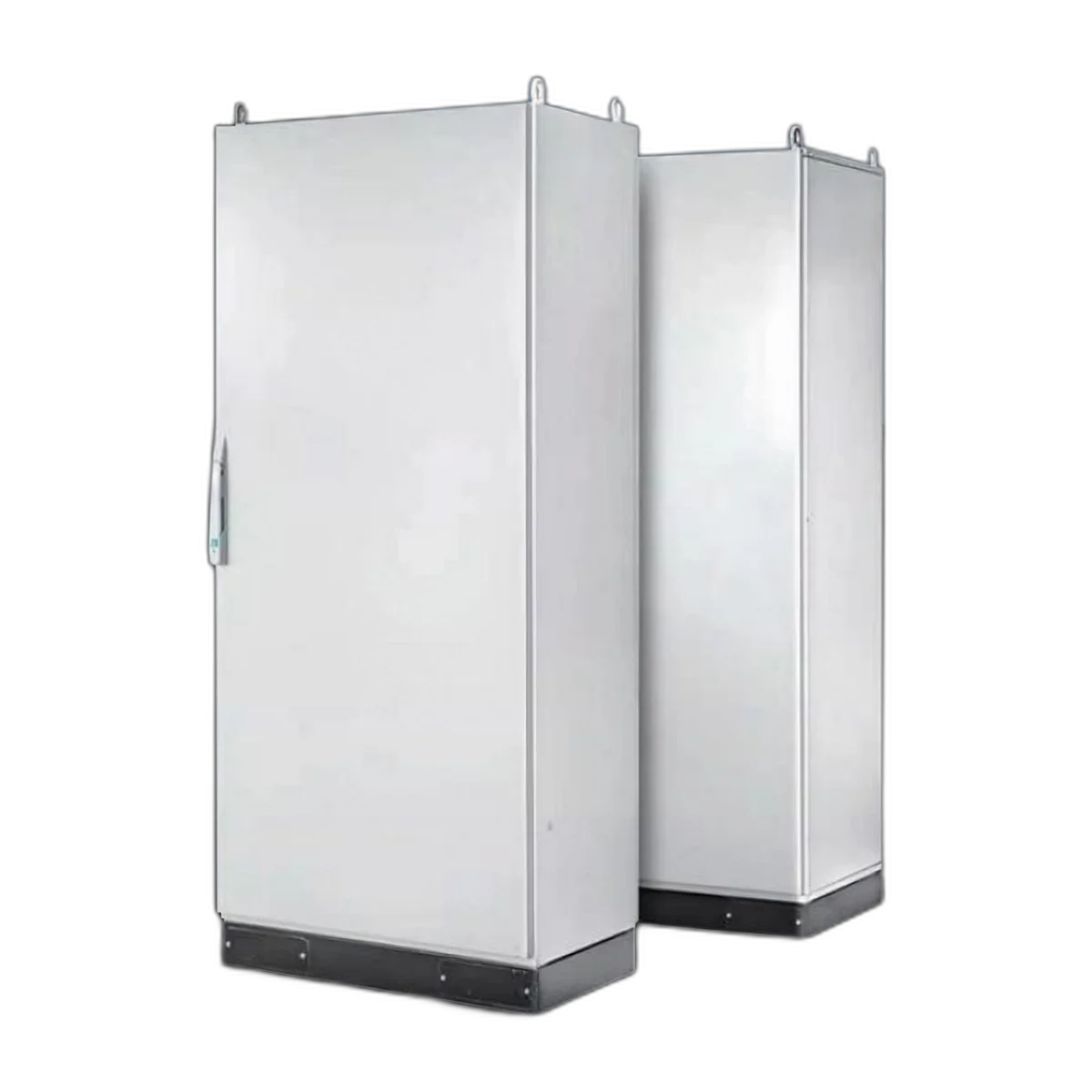
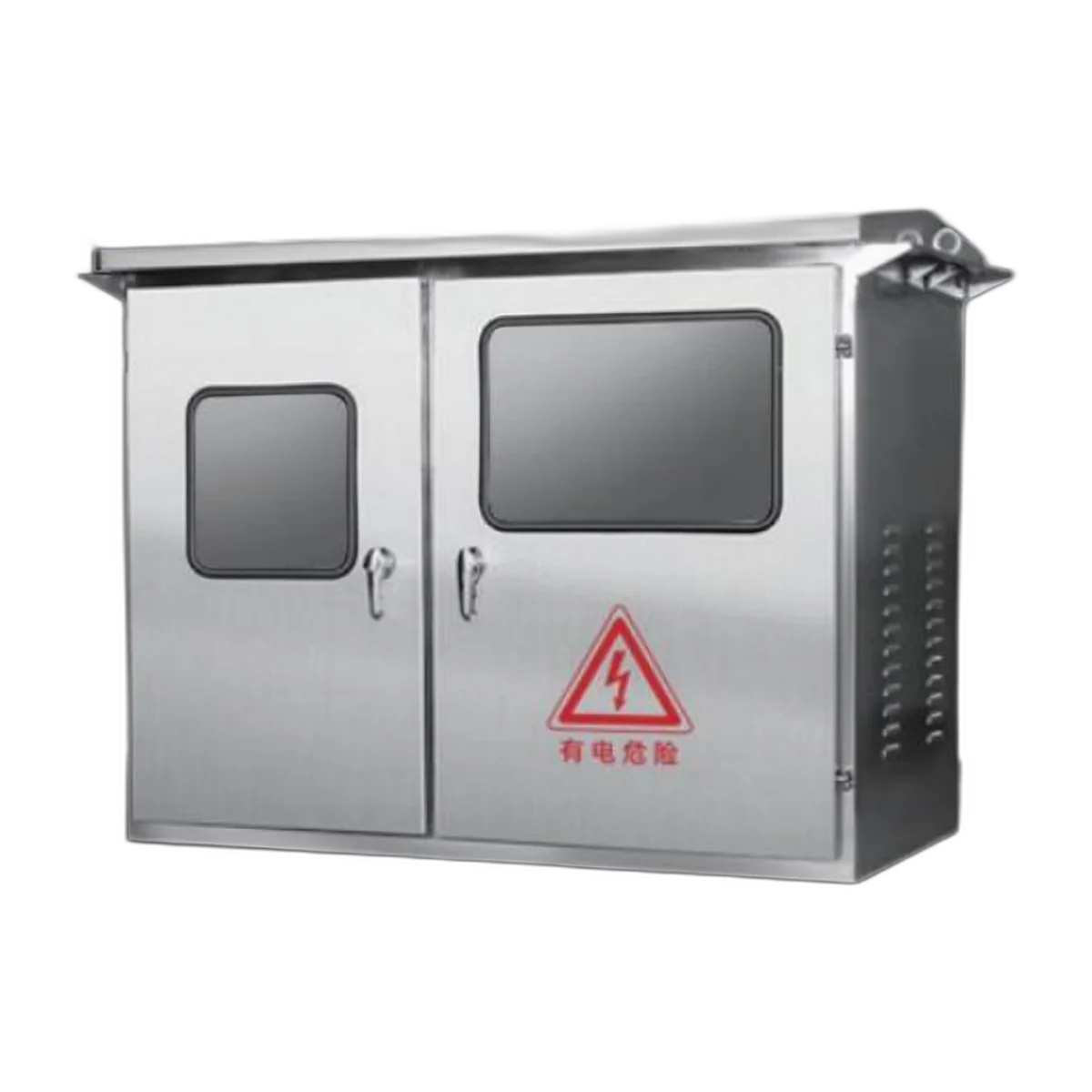
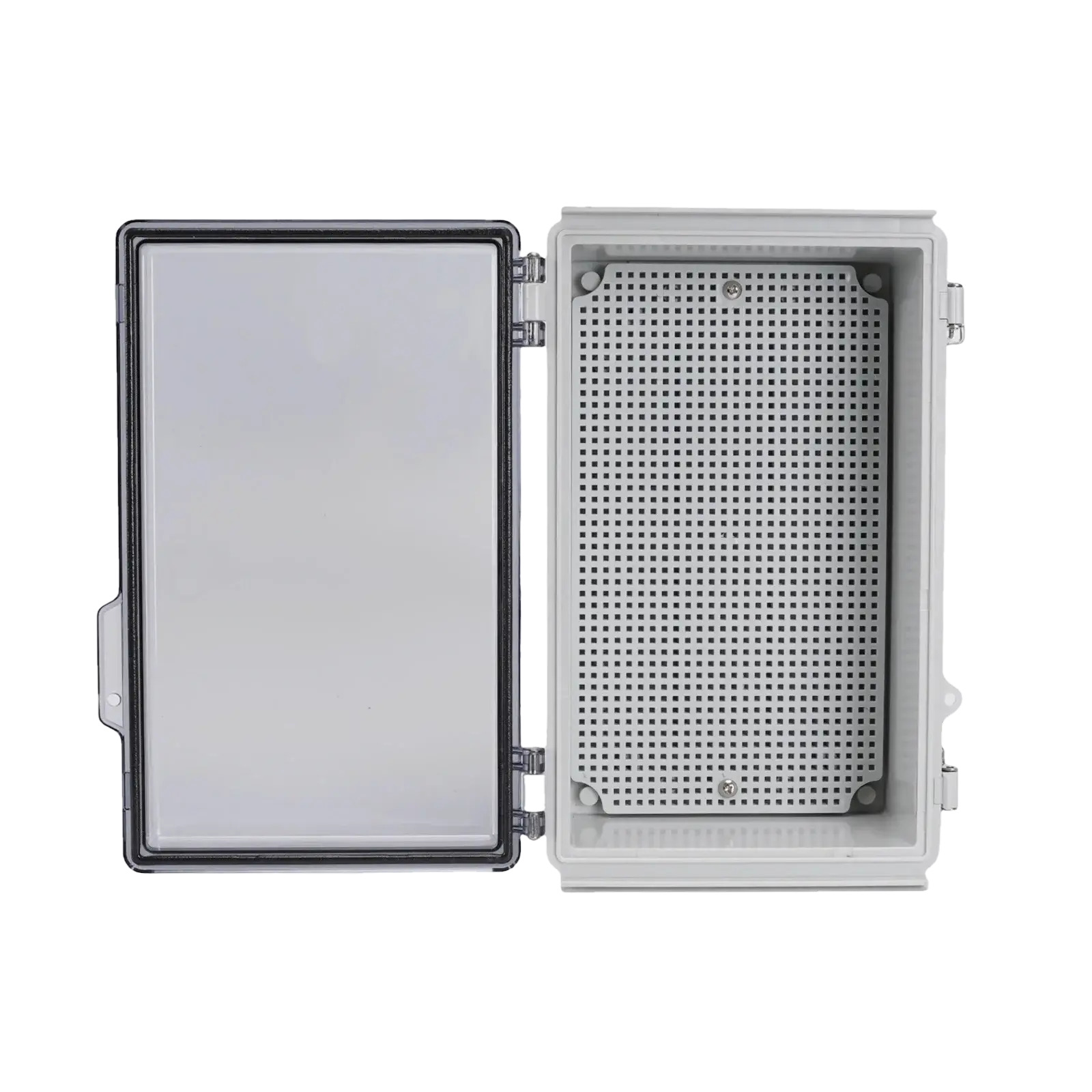
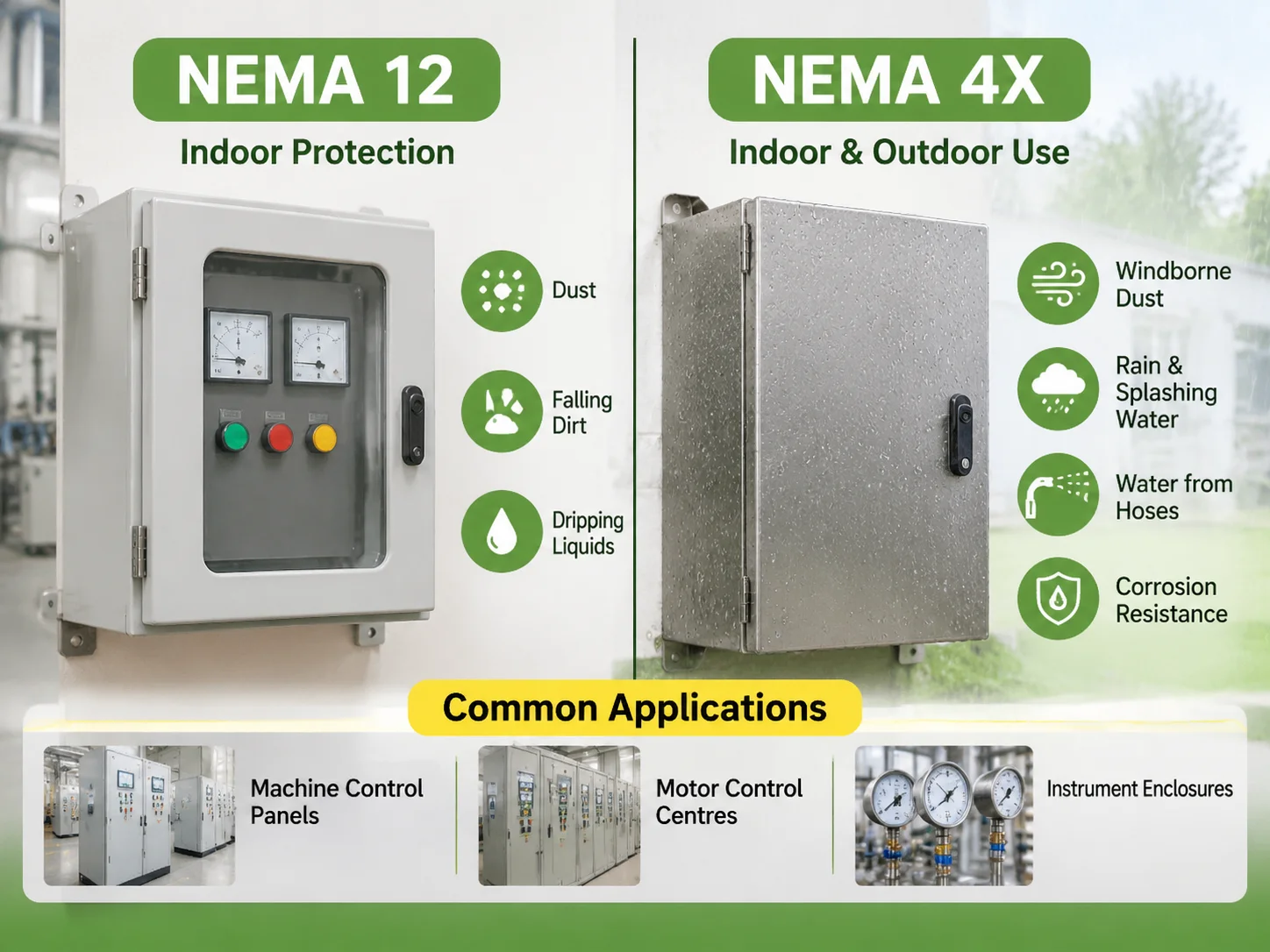
The most common applications for these types of enclosures are Control Panels for Machines, Indoor Motor Control Centres, and Instrument Enclosures located within Plant Rooms. The Metal Distribution Box with Acrylic Window is the standard format of these types of enclosures as it allows Operators to read Meters or Displays without having to open the door. The Type 12 rating for many of these products is built around this ability.
What NEMA 4X Certifies
NEMA 4X rating refers to the manufacturer certification of a Type 4X enclosure, which can be used for indoor or outdoor applications. The enclosure protects against Windborne Dust and Rain, Splashing Water, Water Directed by Hoses, and Corrosion. The enclosure will not be damaged due to the formation of Ice on the enclosure and will protect Personnel from Incidental Contact.
Type 4 is the same as Type 4X minus the corrosion requirement; therefore, the only difference is the single letter designation. This letter appears to have been eliminated from Value-Engineered Submittals because a Painted Steel Type 4 would look the same as a Type 4X in a Photograph but cost approximately 50% less.
The NEMA 4X rating is both a Material and Design Property; the rating is achieved in 304 or 316 Stainless Steel, Polycarbonate, Fibreglass, or Cast Aluminium. The way a painted steel enclosure is constructed means it cannot withstand the same conditions as a NEMA 4X enclosure, regardless of what the manufacturer’s coating specification indicates.
Side by Side: The Differences That Decide It
The following table summarizes the differences between the NEMA rated product types that factor into the selection of a NEMA product.
| Property | NEMA 12 | NEMA 4X | What it changes on site |
|---|---|---|---|
| Location | Indoor only | Indoor and outdoor | One rating, two environments |
| Dust | Dust, falling dirt | Dusttight, windblown dust | Conductive dust rules out 12 |
| Water | Dripping non-corrosive liquid | Hose-directed water | Washdown rules out 12 |
| Corrosion | None | Rated | Coastal and chemical sites |
| Gasket | Formed flange or light gasket | Continuous compressed gasket | Door hardware and cost |
| Typical material | Painted steel | 304 or 316 stainless, PC, GRP | Drives the price |
| Approximate IP equivalent | IP52 to IP54 | IP66 | Informative, not formal |
| Relative price, same size | 1x | 2x to 4x | The budget decision |
Regarding the IP equivalent ratings shown in the final two rows of the above table. While comparing IP ratings can provide general information concerning the relative amount of protection between the two ratings, it is not intended to be used as a comparison of IP rating systems or to show that products with different IPS or IP ratings have identical performance when put to use under actual field conditions.
The above ratings shown are based on test methods used by both the NEMA 250 and IEC 60529 standards. The NEMA 250 standard includes rating for ice and corrosion, which are not rated by the IEC. Conversely, the IEC includes an immersion test rating that is not included in the NEMA 250 standard. Therefore, if there is a project with specific requirements for both NEMA and IEC ratings, those ratings should be handled separately, with NEMA’s more rigorous standard taking precedence.
The Test That Separates Them
The hose test illustrates the primary difference between the two rating systems in actual field applications and it is also the deciding factor for most field installations.
NEMA 4 and 4X rated enclosures are required to maintain their internal integrity when subjected to high-pressure water sprayed on them in specific ways (pressure, distance from the nozzle, time duration) during testing. Conversely, NEMA 12 rated enclosures are not subjected to this hose spray test because they do not meet the requirements of the NEMA 4 and 4X rating systems. The reason a 12 cannot be installed in a wash down area is because the design was not intended to prevent water from jetting into the area.
The second reason for using a 4X is due to a dust test. A 4X enclosure goes through testing for fine dust with the enclosure being subjected to a negative pressure during the dust test and therefore is made of materials that create a seal (compressed gasket). A 12 does not go through this type of dust test. For example, if a 12 were to be installed in a facility with a lot of carbon black, metal powder or coal dust, it is not just a cosmetic difference. The conductive dust will settle on the terminal and bridge the terminal together. The 12 relies on the 1/8″ drain or flange gap for this to occur.
The corrosion test is the third example, and the one that most people underestimate. The enclosure is tested with exposure to salt spray for a specified amount of time. The test measures the amount of base metal that is exposed due to corrosion. If a painted steel 12 is located in a coastal location, the rust will appear typically within 2 years at the fixing points, and this rusting is initiated by a scratch created by the installation of the enclosure, instead of at the factory prior to installation.
Materials: Painted Steel Versus Stainless, Polycarbonate and GRP
There are four different material types that fall under the 4X enclosure category; the choice of material for 4X enclosures is determined primarily by resistance to impact, UV radiation and temperature in relation to the rating classification.
The default material for 4X enclosures for food, pharmaceutical, and General Industrial applications is 304 Stainless Steel. The addition of Molybdenum (316 Stainless Steel) is used where chlorides are present, for example: coastal area installations, storage of salt, and any facility that uses Hypochlorite as a sanitizing agent. For enclosures that require the greatest protection at a cost-effective price, while remaining lightweight enough to be mounted to machines, are best suited using Polycarbonate, which has the highest impact resistance available. However, Polycarbonate does not corrode; it does have a weakness to U.V., as an unstabilised grade yellow and become brittle when exposed to the elements (greater than 1 year outdoors). GRP (Glass Reinforced Products, or fiberglass) is often the middle ground between Polycarbonate and Stainless Steel, being used for large enclosures where Stainless Steel would be too heavy.
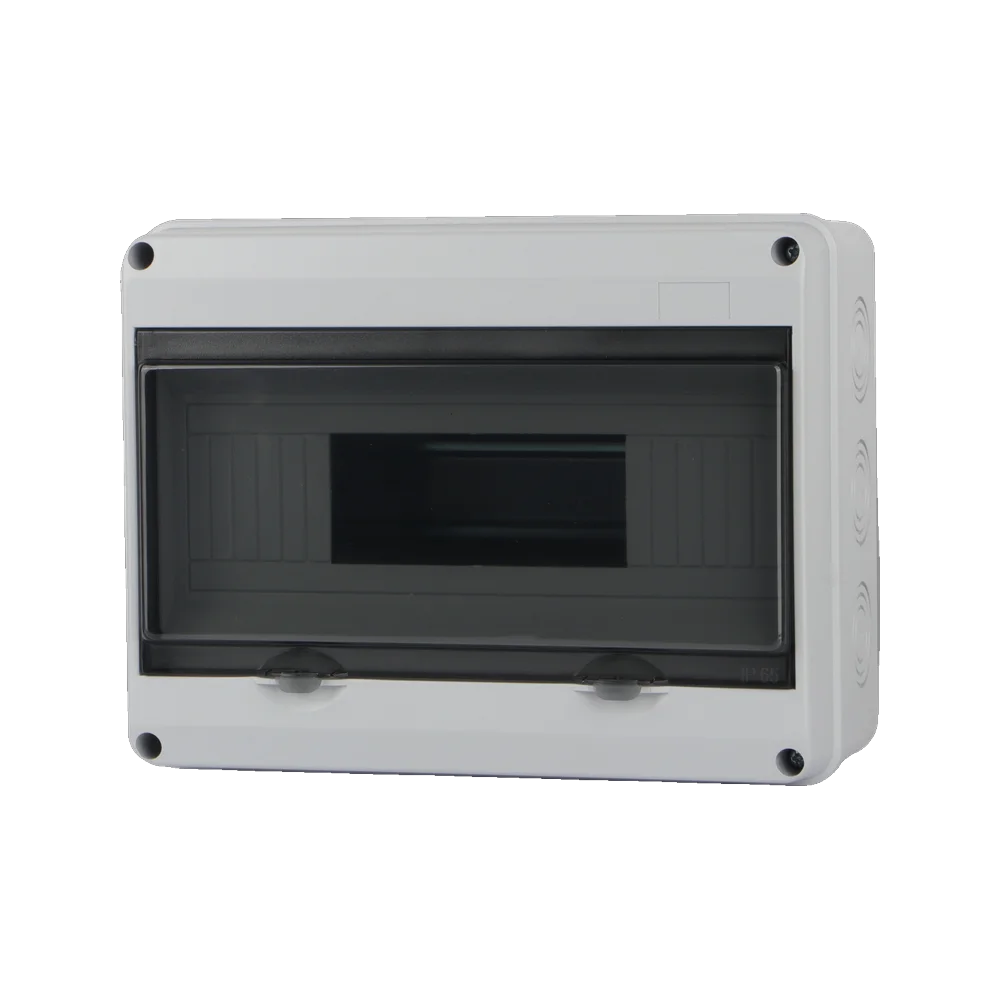
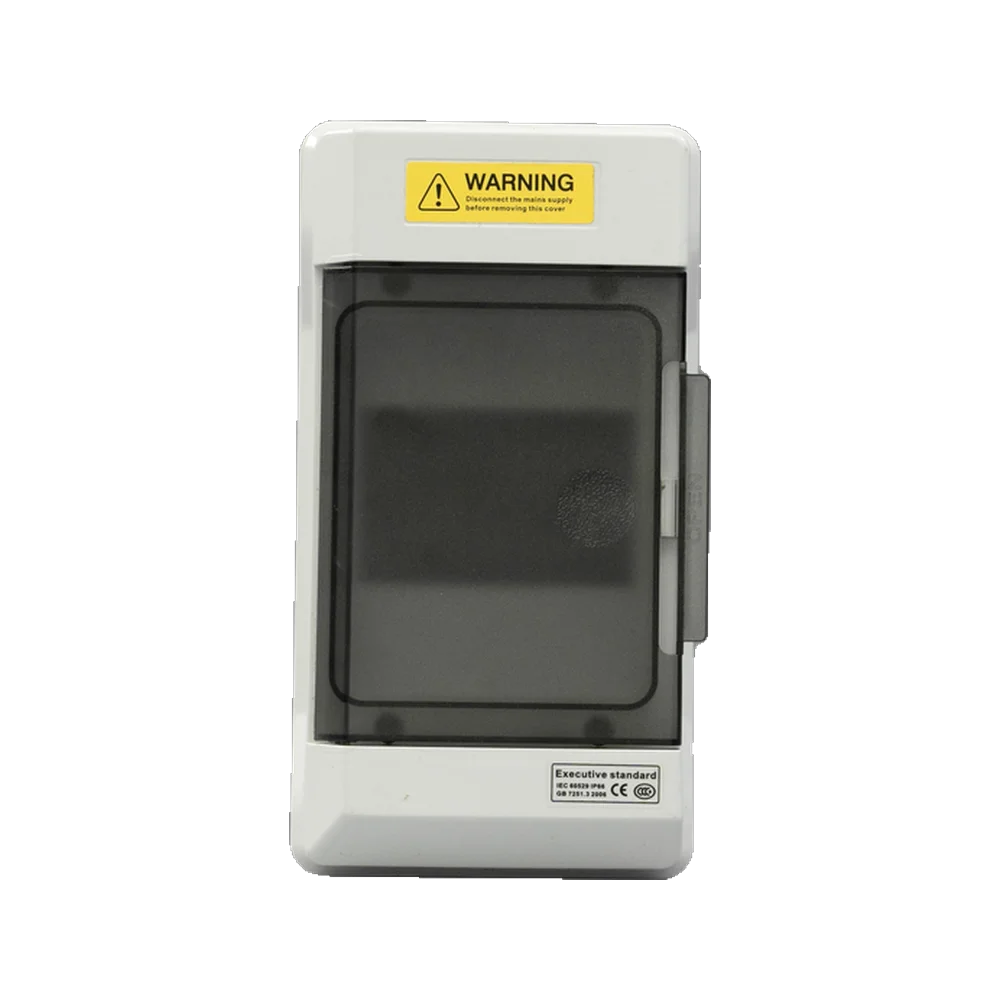
In the case of the traditional Polycarbonate box design, (a type of electrical enclosure), a typical IP66 Plastic Electrical Box is a perfect example, as Polycarbonate makes up the majority of the materials used in outdoor instruments. The grade of the Polymer will ultimately determine if it remains in good condition after 10 years versus if it was simply “passed” the first year of testing.
Where NEMA 12 Is the Correct Choice
In contrast to the 3 situations where NEMA 4X is a viable option, 12 makes better sense, both in cost and benefit, when being specified.
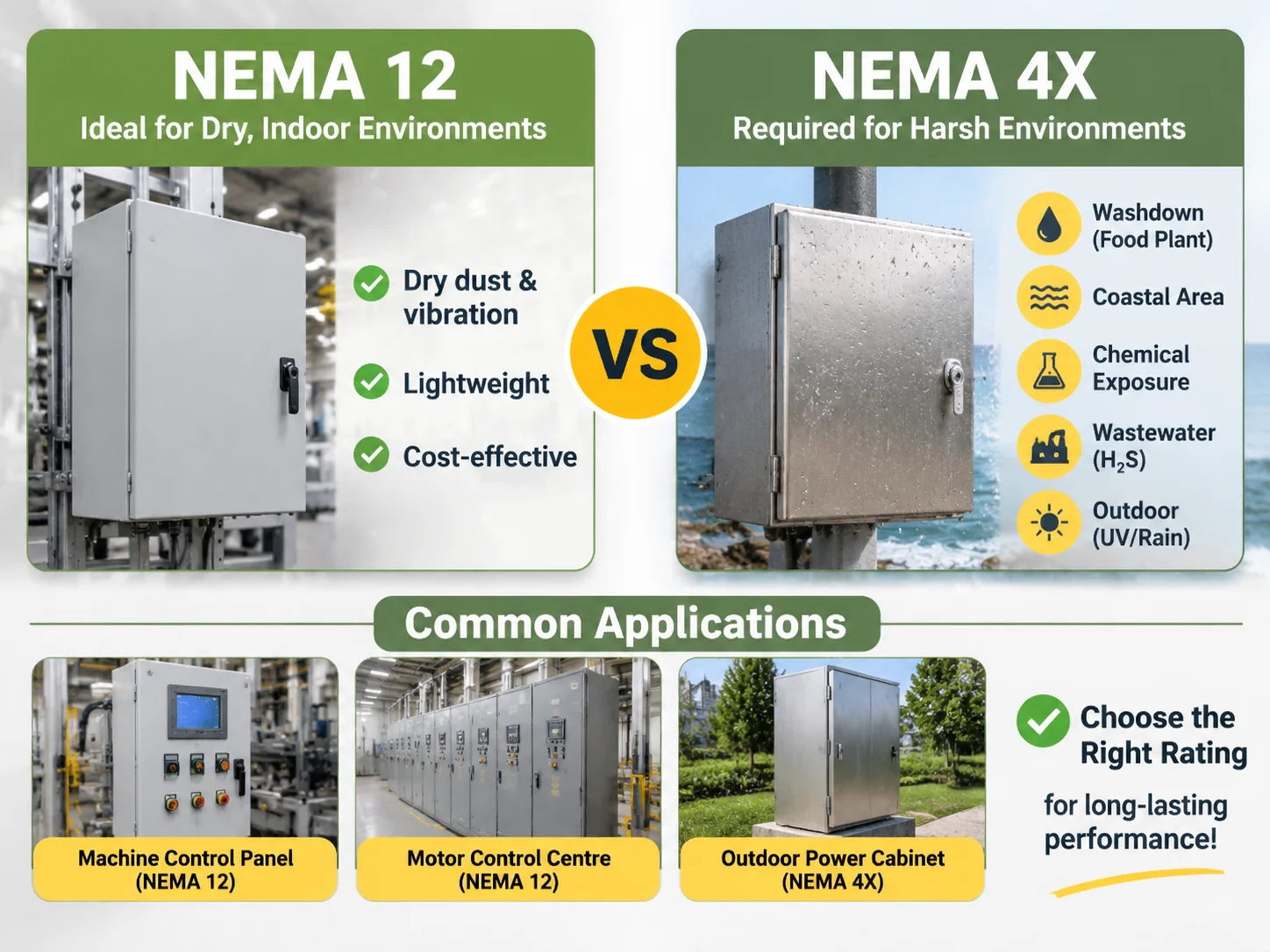
First, consider a machine control panel located in a dry production hall. The environment is contained and primarily constituted by dry dust and vibration; water does not exist in the production area and the control panel will be opened every week e n maintenance. This is an ideal application for 12, it is also light weight, which is particularly important when mounted directly on a machine rather than having been mounted on a wall.
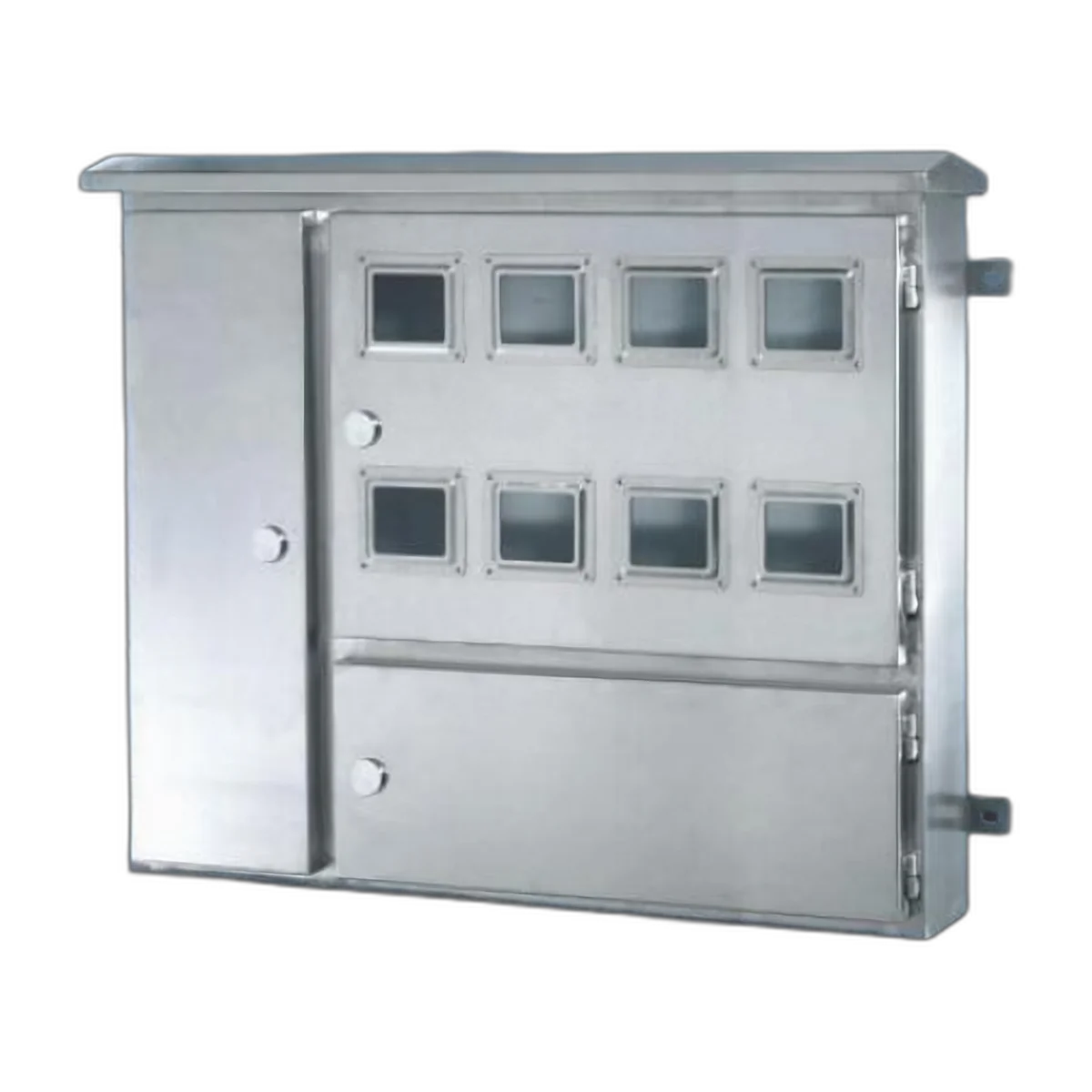
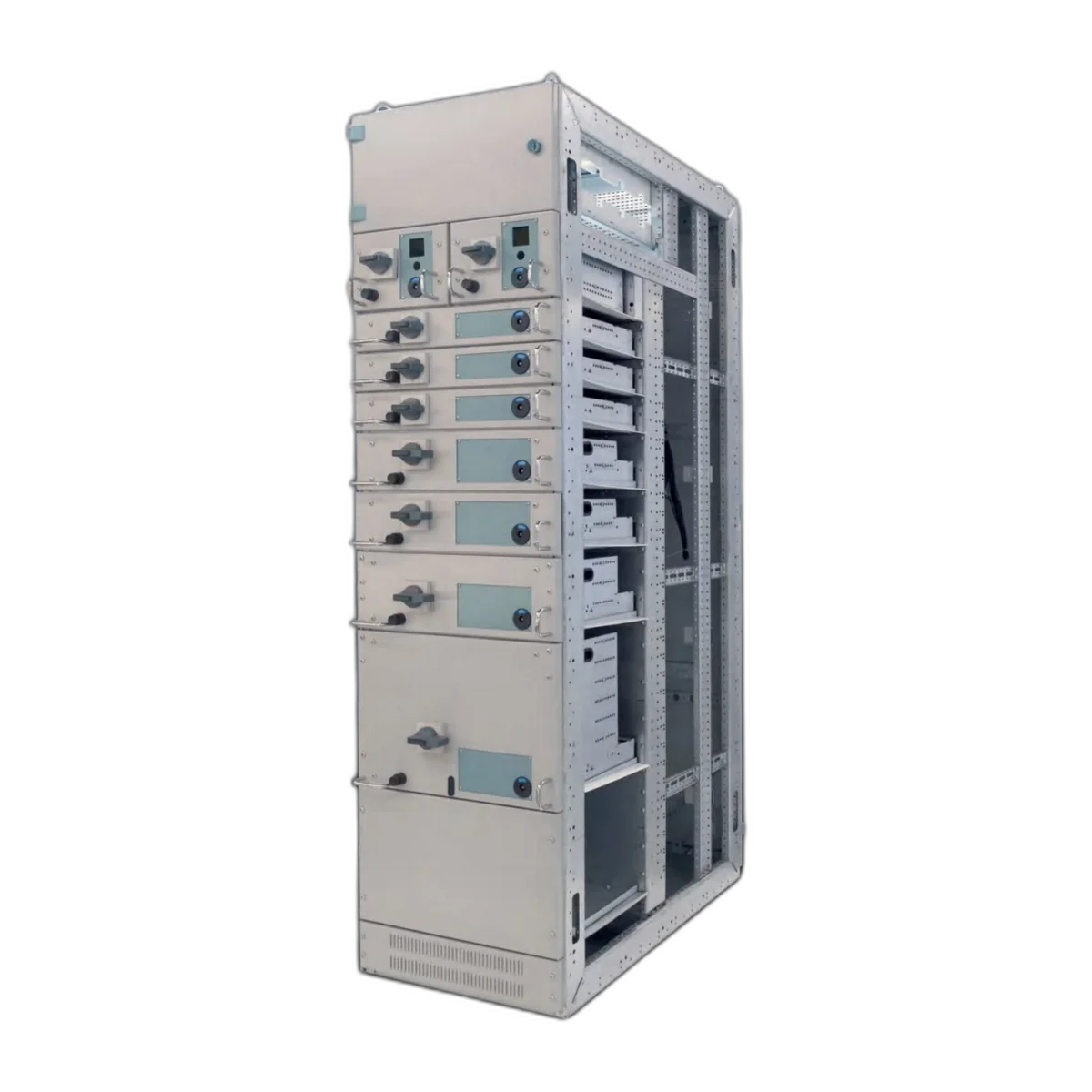
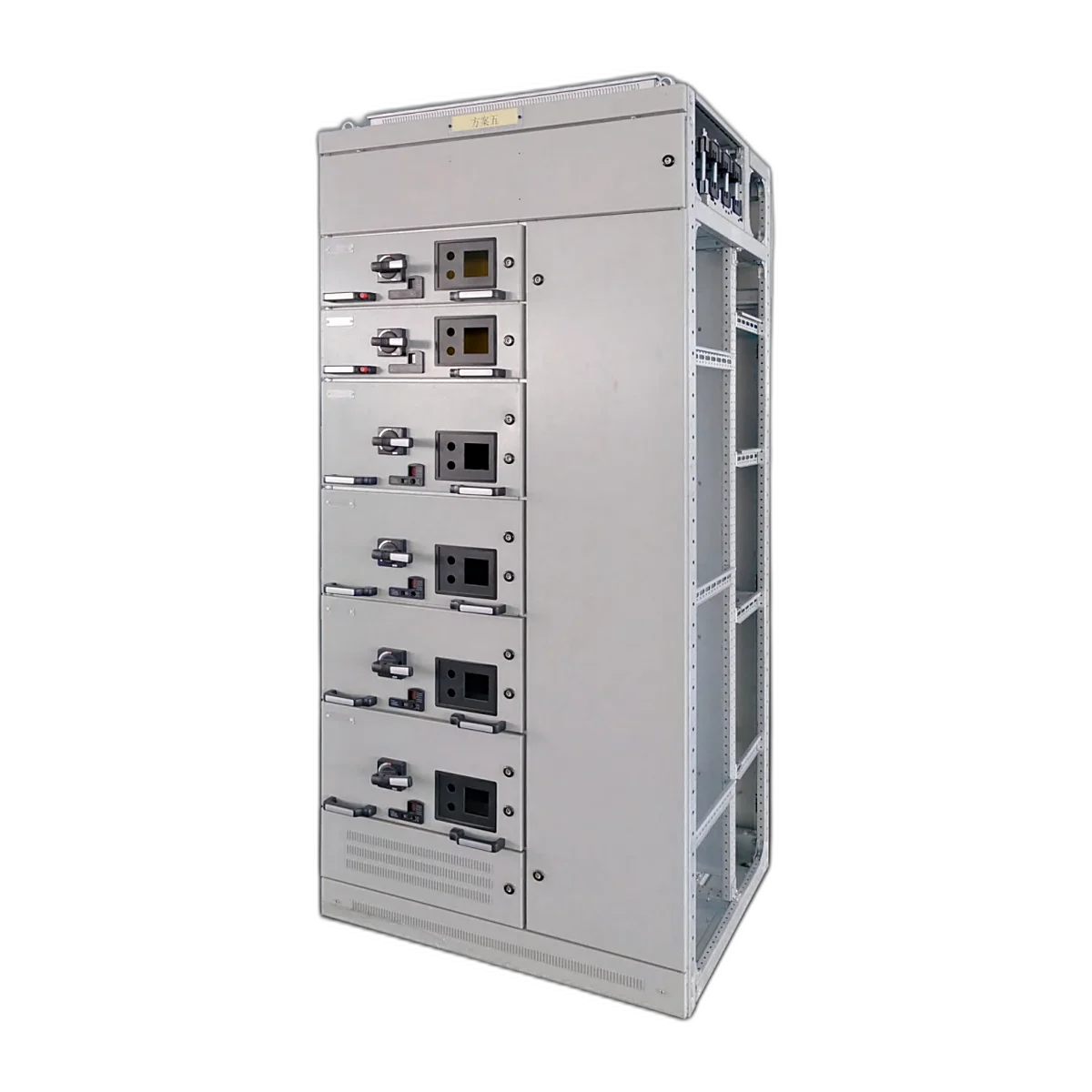
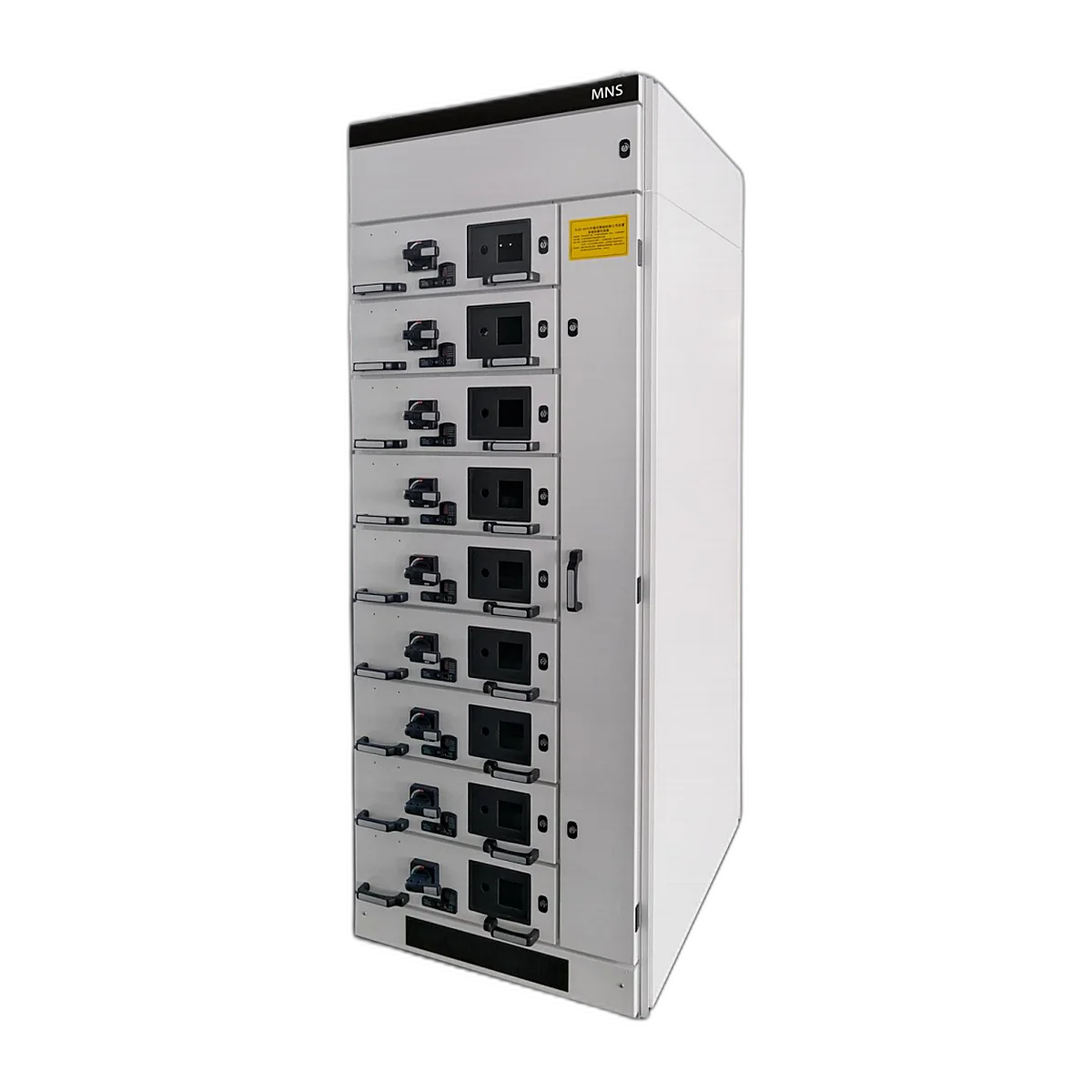
Secondly, consider a motor control centre located within a plant room environment, again, as previously described in relation to a control panel; however, this particular type of installation may occur in many sections; therefore, where the difference in cost between 12 and 4X is multiplied by 8, then that cost factor alone will have a significant impact on the project budget.
Finally, consider an instrument enclosure located within the confines of a covered area, where conditions are not conducive to washdown and the presence of chemical spills does not exist. A different type of error related to improper installations on a 12 occurs when a 12 is installed where the actual environmental exposure includes water from hoses or chlorides (not necessarily hose water). The failure here is not immediate and is often a case of misdiagnosis; it shows as water sitting inside the bottom of the box, and two to three years after installation, will appear as corrosion at lower edge. By the time corrosion has occurred, the equipment inside the box will have suffered damage and the warranty will have expired.
Where NEMA 4X Is Mandatory
| Environment | Correct rating | Material | Failure if under-specified |
|---|---|---|---|
| Food plant washdown, daily | 4X | 304 stainless | Water in the box within a year |
| Coastal, within 1 km of sea | 4X | 316 stainless | Tea staining, then pitting at fixings |
| Wastewater, hydrogen sulphide | 4X | 316 stainless or GRP | Base metal attack at every scratch |
| Chemical dosing room | 4X | Polycarbonate or GRP | Gasket and latch degradation |
| Outdoor skid, any climate | 4X | Stainless or GRP | UV and rain ingress |
| Carbon black or metal powder | 4 or 4X | Steel or GRP | Conductive dust bridges terminals |
Use of water in a box that is used to wash down food processing facilities is a good example of where NEMA 4X should be required. A box that will be exposed to water daily should be rated 4X, and the material used to build the enclosure should be 304 stainless. If a 304 stainless box is rated under NEMA 4X, then water will typically be present in the bottom of the box within 12 months after installation due to corrosion.
Coastal: A good example of what is meant by ‘coastal’ is a location that is less than one kilometre from the beach. In this case, a box placed within one kilometre of the ocean should be rated 4X and made from 316 stainless. A box constructed from 316 stainless will likely start to show signs of corrosion as the chloride ions from the seawater attack the surface of the box due to the buildup of tea stains on the surface. Eventually the tea stains will turn into pitting around the bolt holes and any exposed screw heads. If a sea-coast location is using equipment manufactured from low grade materials such as 304 stainless, then corrosion will begin occurring immediately.
Waste treatment: A box rated 4X for a wastewater environment, which may be exposed to hydrogen sulphide, should be manufactured from 316 stainless or GRP. When hydrogen sulphide contacts metal surfaces, the metal will be attacked at every scratch.
Chemical dosing room: A box that will be used for storing chemicals in a chemical dosing room should be constructed from polycarbonate or GRP. In such cases, the gaskets and latches are likely to degrade and fail because of the effects of the chemicals on the gaskets and latches.
Outdoor: Boxes manufactured for outdoor use should be rated for NEMA 4X and constructed from materials such as stainless steel or GRP in any climate. These materials are designed to protect against UV rays and rainwater penetration.
Brush: A good example of the brush used to create brush-type circuits is by using brushes made from conductive carbon black dust. These brushes can create conductive dust bridges across their terminals if not correctly installed.
The last type of application is when NEMA 4X is required by the installation of a product in a jurisdiction that has adopted the same standard. Some municipalities define marinas, fueling stations, and certain agricultural buildings in their codes, but in these cases, the municipal codes take precedence over the environmental issues.
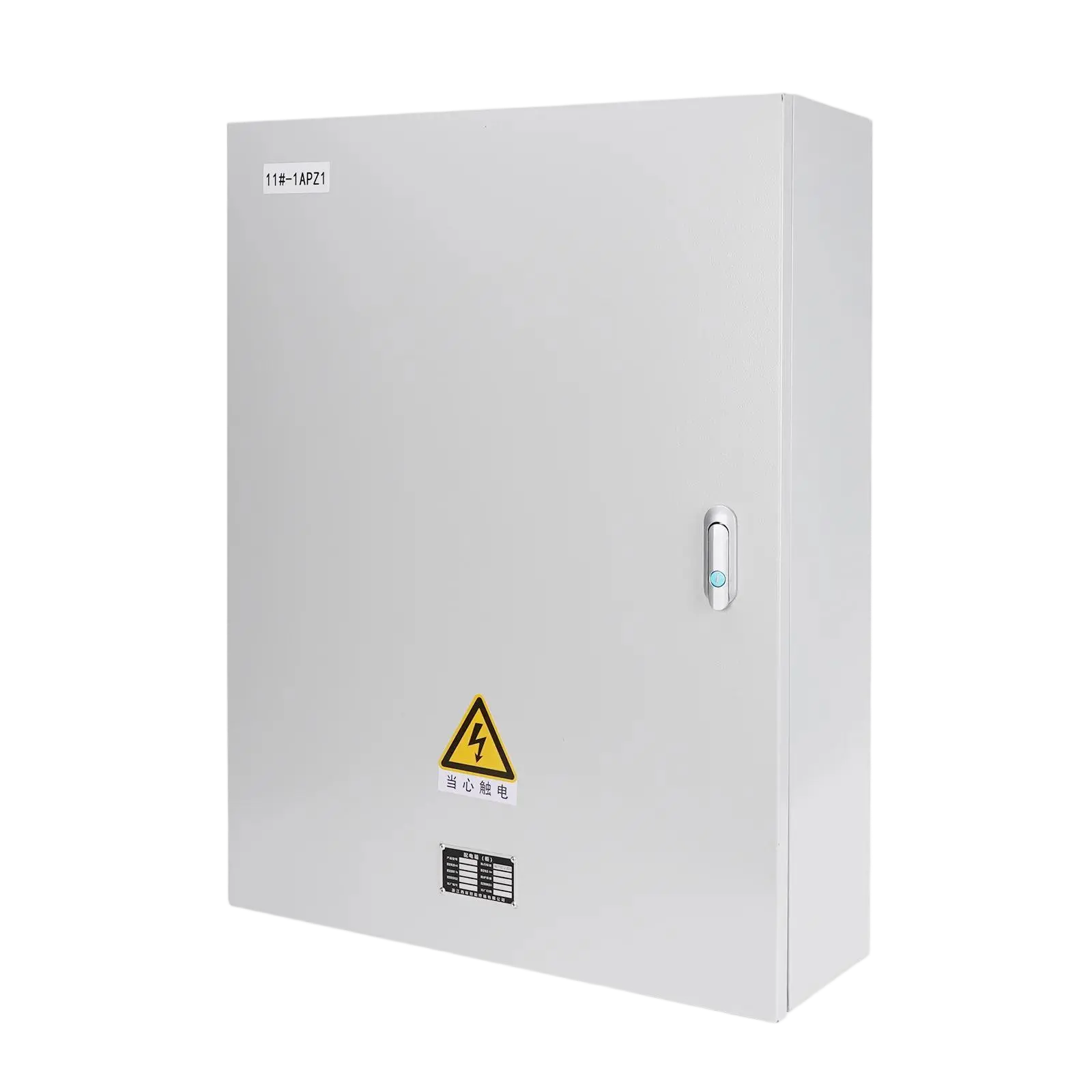
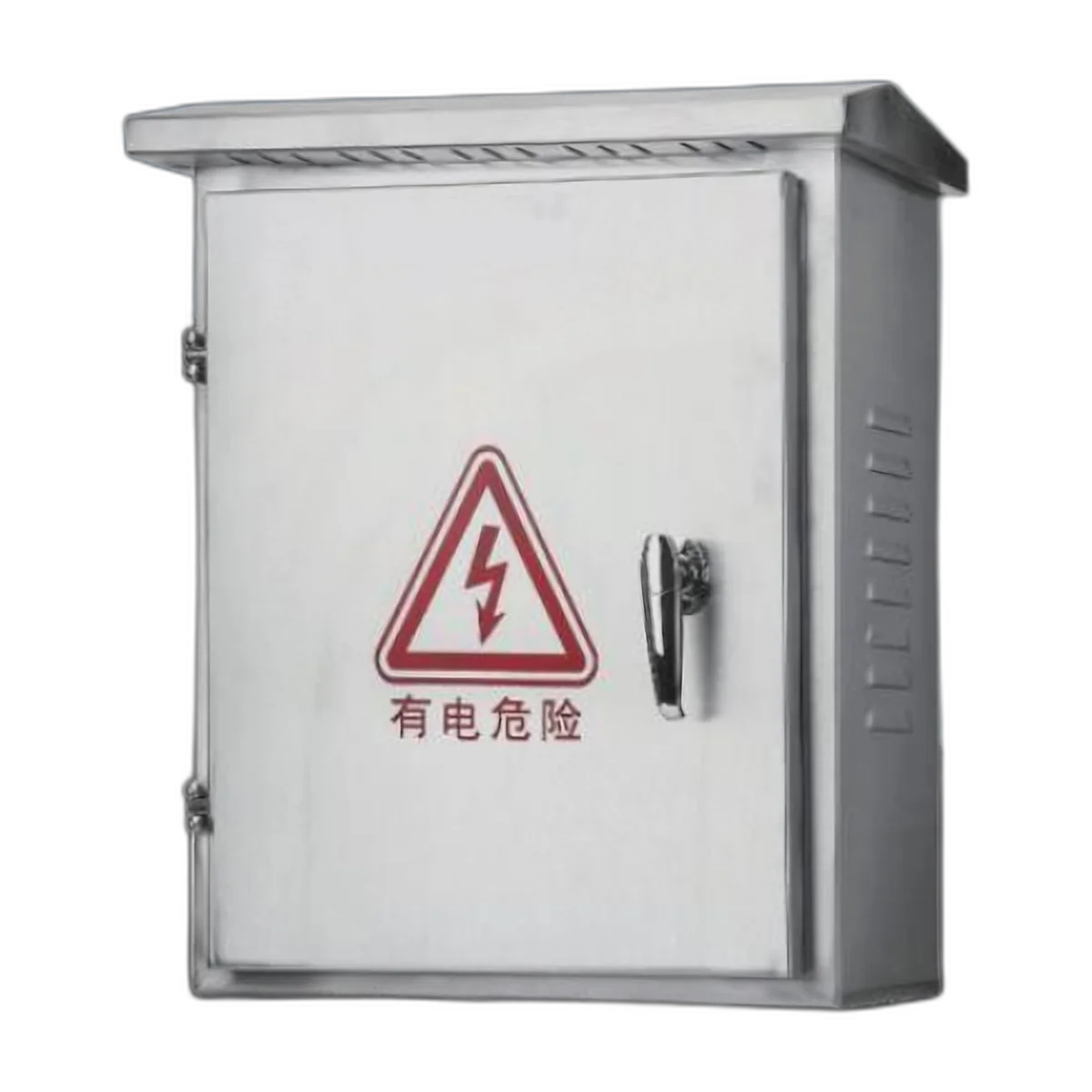
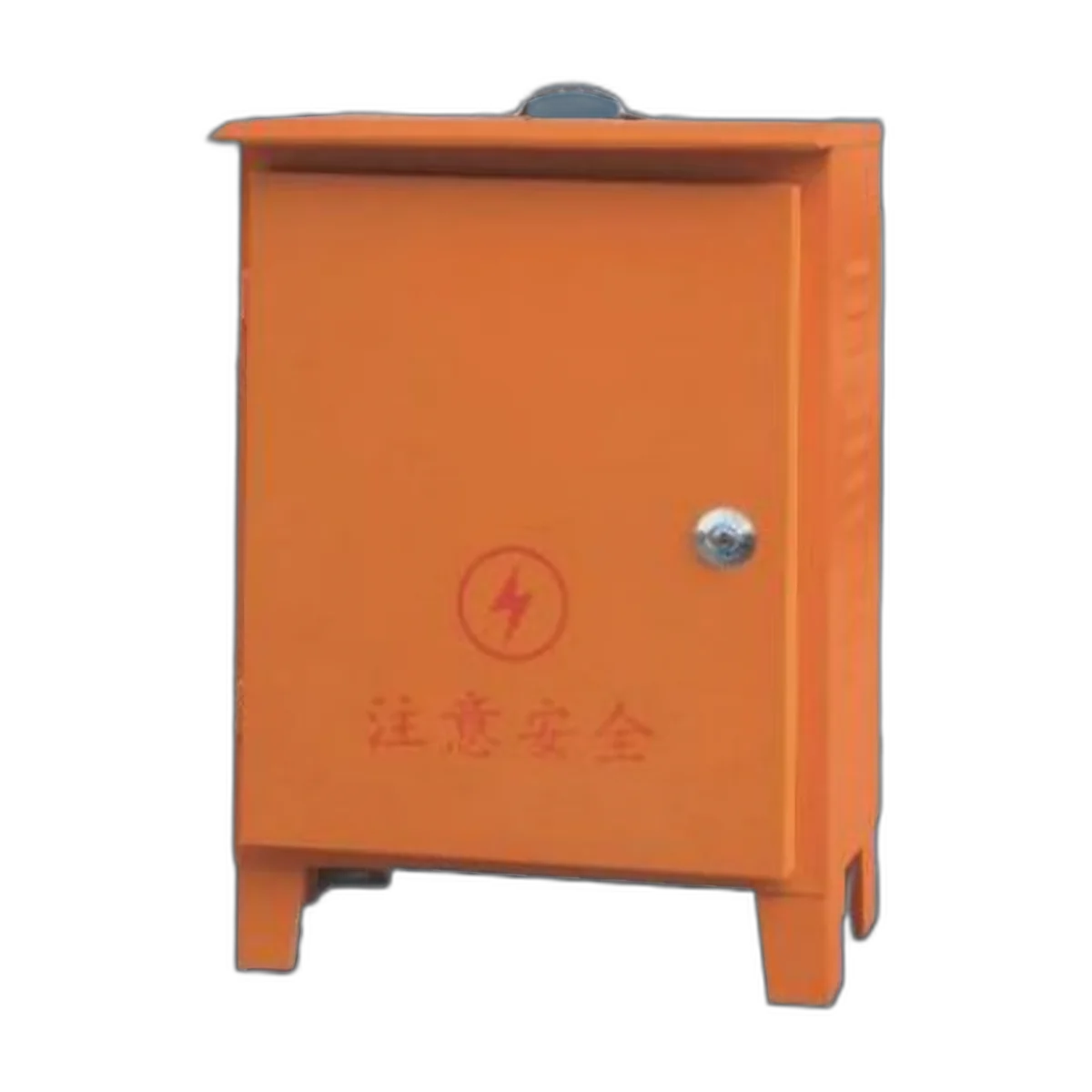
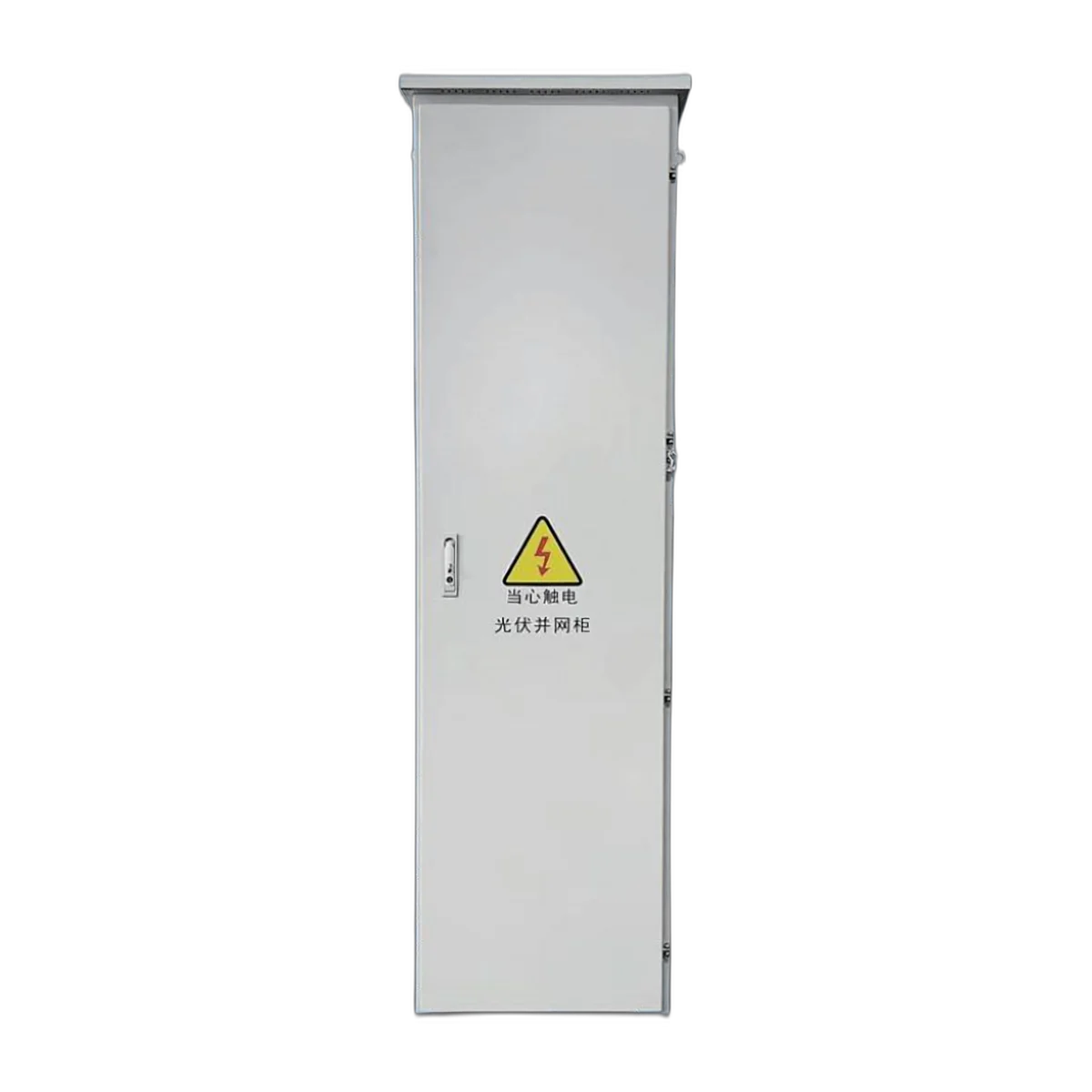
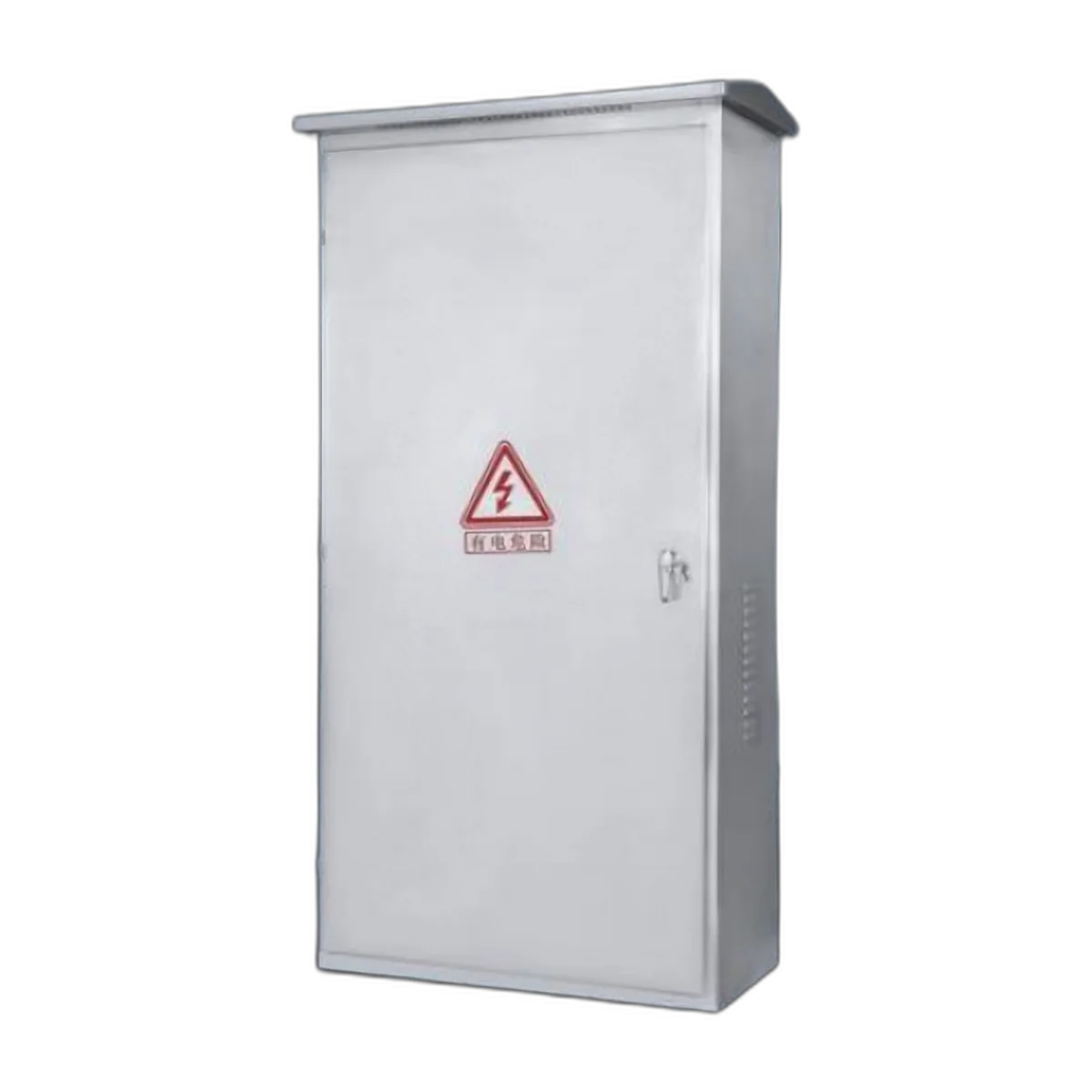
If an enclosure is part of a larger outdoor assembly, only one 4X determination will be made at the assembly cabinet level; otherwise, you would have to pay for a 4X rating for each component individually. The outdoor stainless steel power cabinet is designed this way because the entry points for the power and mounting brackets and thermal path are all integrated into the overall design.
What NEMA 4X Is Not
The following are three misunderstandings of the rating that lead to confusion for more people than the actual rating itself.
4X is not explosion-proof. A 4X enclosure will not protect you or your equipment from explosion hazards. Ratings for explosion-proof applications (NEMA 7 for Class I Division 1, NEMA 9 for dust ignition) are independent of the 4X enclosure rating and are subject to separate certification. Therefore, the installation of a 4X box in a Zone 1 area, regardless of quality, constitutes a violation of the code.
4X is not IP68. The IP68 rating relates to continuous immersion, while the 4X rating indicates protection against water directed through a hose. If there is flooding present, a sump system requires submersible ratings (separate designs, separate testing, etc.).
4X does not indicate that an enclosure has been tested or approved for fire conditions. The 4X rating provides no information on how an enclosure performs in a fire. Certification for fire protection is separate from testing for electrical installations; hence, there is usually no connection between electrical safety and fire safety under UL 508 A.
The related confusion between Type 4 and 4X is for the same reasons outlined above. A type 4 enclosure is a watertight and dustproof enclosure that does not provide corrosion resistance. It is often an acceptable and lower-cost alternative for inland applications that do not contain chemicals. You can eliminate 4X when used inside a building; however, you should not use a 4X enclosure in a coastal environment.
Cost: What the Rating Adds
The 4X rating increases the cost of an enclosure. If you compare a type 4 and a 12 (standard) enclosure with the same dimensions, the 4X enclosure will cost from 2 to 4 times more. The 2–4 time price difference is the greatest at smaller sizes, with the cost of the gasket and latch component having the greatest impact; however, the difference decreases at larger sized enclosures due to the fact that the cost of the steel material makes up the bulk of the price of the enclosure.
In addition to the cost of the enclosure itself, buyers often forget the increased costs associated with modifying a stainless enclosure versus a standard enclosure. The modification process involves punching the mounting holes in a stainless steel enclosure rather than drilling them, and also requires either a gland plate or seal to maintain the waterproof rating. Modifying a polycarbonate enclosure involves using a hole saw to create the holes and a sealing gland for the enclosure to maintain its rating. In both cases, the additional workload involved with making the modifications ultimately results in increased installer labour costs compared to modifying a painted steel enclosure, and improper modification will result in voiding any warranty on the enclosure. The enclosure range is set up so that box and plate are together in a single order, making it less expensive than modifying at a job site.
Installation Details That Void Either Rating
Four ways exist to lower the rating, and three were introduced to resolve another problem.
Draining holes in 4X enclosures is one of the most frequent. Besides stopping condensation, this changes a 4X to a 3R enclosures in one step. The recommended solution is a membrane breather drain or small heater, not an opening. A drain may be permissible on the Type 12 enclosures; therefore, the two types of ratings must not be confused.
Mounting within the back of the enclosures without proper sealing around the mounting screws creates the second issue. Four screws through the rear of a 4X enclosure creates four locations for entry of water via the screw thread. Using a flange with seal or gasket may help to correct this issue.
A cable gland rated lower than the type of enclosure is the third situation. A cable entry to an enclosure rated IP66 means a cable gland rated IP54 but the ES will only be rated IP54. The gland, locking nut and sealing washers must be considered while determining the rating.
If a gasket is pinched, stretched or painted over, this is the fourth problem. Gaskets must always sit in the proper groove without distortion (compression does not provide the required support); they should never be painted on. The completion of a rework that includes spraying both the door/component and the gasket at the same time eliminated the way the gasket formed a seal.
How to Specify and What to Ask the Supplier
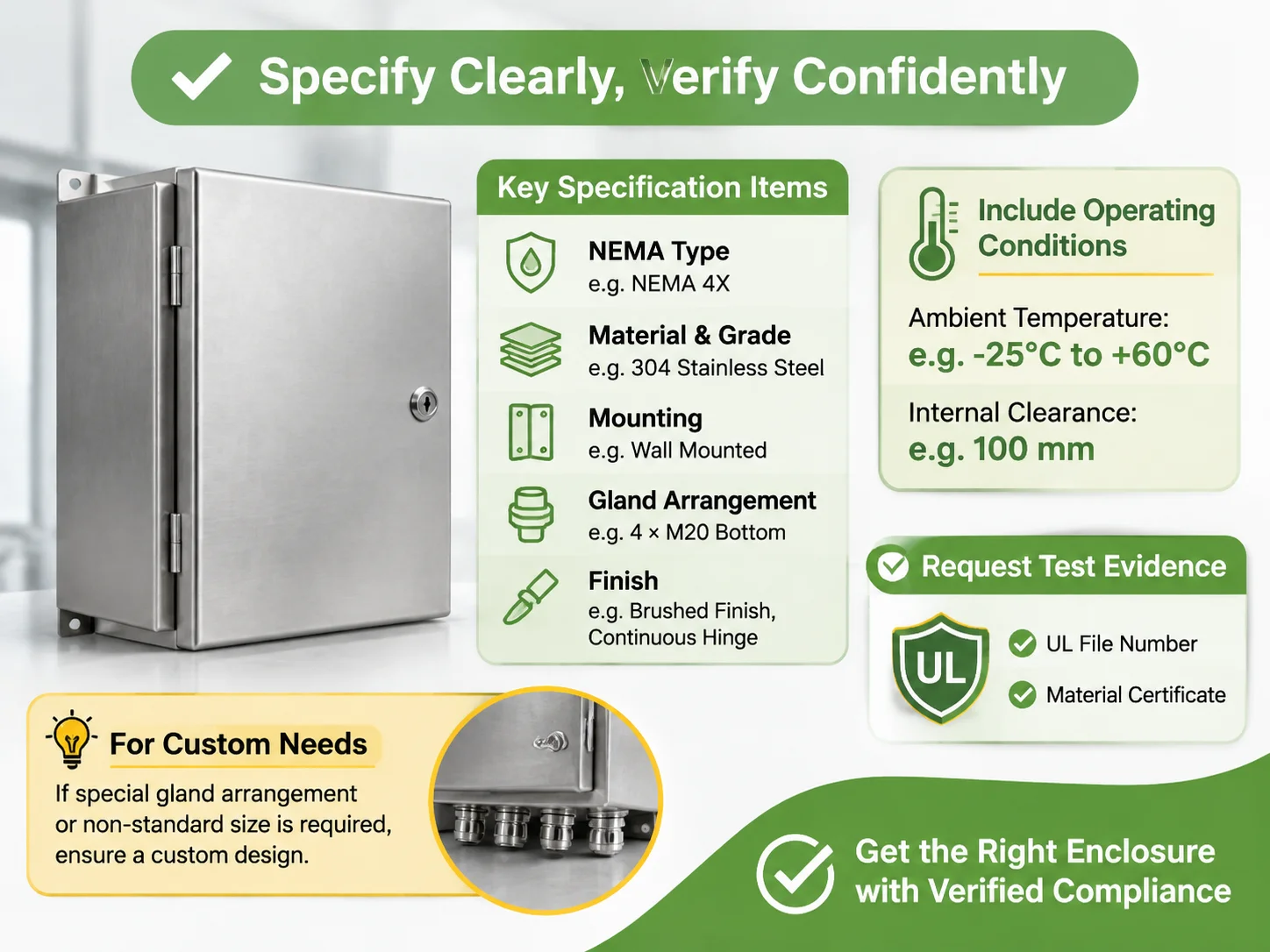
To tell your supplier what you want and need you should provide them with five items that pertain to NEMA certification; NEMA type, material (including grade), mounting, gland arrangement and finish. As an example, “a NEMA 4X, 304 stainless steel, wall mounted, four M20 entry holes on the bottom, brushed finish, continuous hinge, and no drain”, has no way for interpretation.
Also, when obtaining a quote, include the ambient temperature range and internal clearance needed so that the quote can be verified rather than having to be taken by trust as accurate. For example: if you have received a quote for a NEMA 4X enclosure without an ambient temperature specified; the enclosure could be rated for temperatures between -25 C to -5 C, which would make a significant difference depending on whether or not it will be used in a cold storage environment or in a Northern area.
Finally, test evidence should accompany your quote request. It is important to note that NEMA does not certify; they allow manufacturers to self-declare compliance to NEMA 250 and, when necessary, third-party certified to UL 50E through an independent lab. A supplier who can provide you with the UL file number and the material certificate is a supplier whose claims you can verify, and an alternative supplier who cannot provide documents is asking you to take their word. When a project requires either a specific gland arrangement or a size that does not fit a standard option, an enclosure must be designed as has been required by the Owner in this case.
FAQ
What is NEMA 4X good for?
NEMA 4X is intended for both indoor and outdoor environments where water is directed at the enclosure using hoses; windblown dust; and corrosive atmospheres. NEMA 4X is often used for washdown applications in food and beverage plants, waste treatment facilities, marine/coastal applications, industrial chemical dosing areas, and outdoor instrumentation applications. If a NEMA 12 enclosure were used in these types of environments, it would have to be modified to meet environmental requirements for water and/or rust.
What is NEMA 12 good for?
A NEMA 12 enclosure is designed for indoor use. It would protect against most types of dust, falling dirt, and non-corrosive liquids. Typical applications include Machine Control Panels, Motor Control Centers, and Instrument Enclosures located within a Plant Room environment. NEMA 12 enclosures are typically lightweight and less expensive than other types of enclosures due to the lack of design and materials that protect against water jets and/or corrosive atmospheres.
Is NEMA 12 good for outdoor?
NEMA 12 enclosures are not approved for outdoor use, as they do not offer any protection from the elements. A NEMA 12 enclosure used outdoors will eventually have water pooling at the bottom of the enclosure after the first season.
Is NEMA 4X explosion proof?
No, NEMA 4X enclosures are not “Explosion Proof.” NEMA 4X rating provides a level of protection against water, dust, and corrosion; however, NEMA 4X does not indicate any level of Ignition Protection. Hazardous locations require either NEMA 7 (for Class I Division 1 locations) or NEMA 9 (for Class II combustible dust) or an ATEX or IECEx certification, depending on location. It is a violation of code to use a NEMA 4X enclosure in a classified Area, including hazardous or explosive areas.
References
- Chatsworth Products — NEMA 4 vs NEMA 12: How Much Protection Do You Need
- NEMA Enclosures — Ratings Buying Guide for Types 1, 3R, 4, 4X and 12
- NEMA — Enclosure Type Ratings and NEMA 250
- Rittal — Enclosure Systems and Protection Categories
- UL Solutions — UL 50E Enclosure Standards
Conclusion
The NEMA ratings for NEMA 12 and NEMA 4X do not form a quality ladder. NEMA 12 is an Indoor Dust/Drip Rating made from painted steel; whereas NEMA 4X is a combination of Indoor and Outdoor Water/Dust Corrosive Ratings made from either stainless steel, polycarbonate, or GRP. The common price difference between these two types of enclosures is typically two to four times the cost of a compressed gasket and a non-corrosive material.
Select NEMA 12 for an internal Machine Control Panel, Plant Room Board, or a Covered Instrument Box, unless you are testing the conditions that would warrant paying for NEMA 4X; select NEMA 4X for applications that require washdown, corrosive materials like Chlorides, or outdoor exposure, understanding that in Salt Air Conditions, the NEMA 4X enclosure will become a Maintenance Item rather than a Permanent Installation. Regardless, specify the type, material grade, and gland arrangement in one sentence because the NEMA Rating is valid only for the configuration tested.